Joy beneath the dullness of repression
Antoni Libera’s 'Madame' follows a young man’s fascination with his French teacher while exploring youth, love, art and everyday life in communist Poland
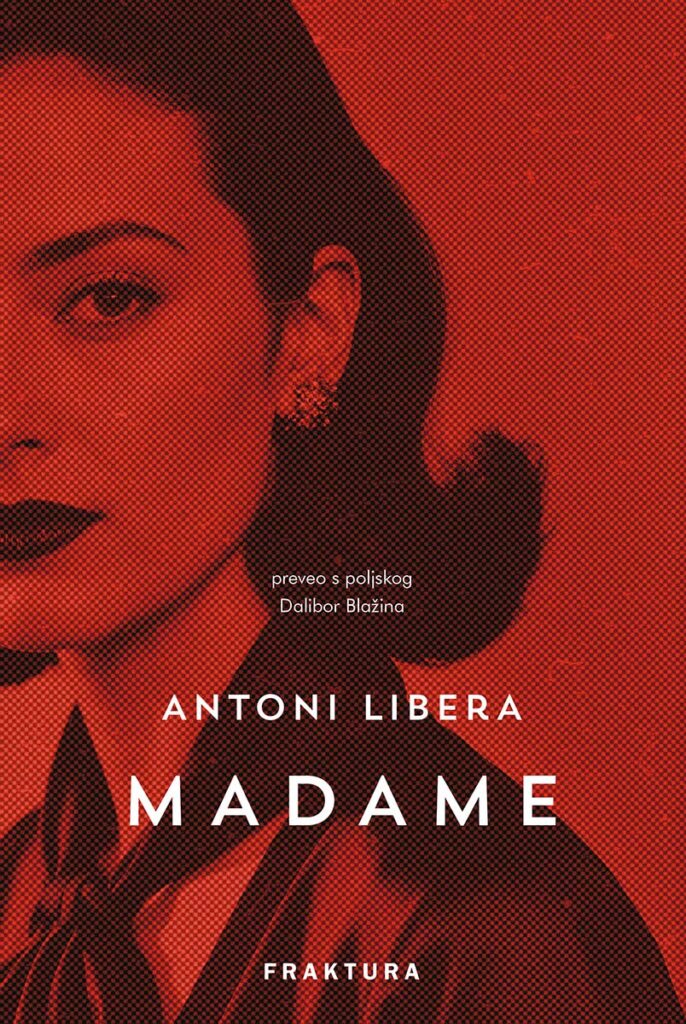
The novel “Madame” is a wonderful ride through youth during the difficult years in Poland, through the tangled threads of Polish history from a time that has remained only a gray blot on the country’s timeline. To avoid any misunderstanding, none of those grand matters, those great events hidden behind the Iron Curtain, are central here; or rather, they are present, but only as mise-en-scène for a love story, a red dot in the grayness of reality.
It is a beautiful novel that speaks about many things, but above all it speaks about how life flourished, more meaningful, fuller, and in some ways even more beautiful, even where the norms of life, almost every one of its moments, were strictly prescribed, and monitored, by party rules.
In Timothy Garton Ash’s excellent book “Homelands: A Personal History of Europe” – and he really did know Central Europe behind the Iron Curtain well, though his views and conclusions about Croatia are, hm, rather English “von oben”, not to say rude, and in any case devoid of any understanding – he writes about how, in the political grayness following the failed protests and uprisings aimed at overthrowing Soviet-style socialism, or at least adapting it, a time of resignation set in, during which great ambitions were suppressed, and materially and economically people began to fall far behind the West. However, he lucidly observes that the lack of political freedom and the impossibility of pursuing – which in the West at certain moments became a new measure of unfreedom, different but equally devastating – material wealth, actually enabled people to socialize, absorb culture, produce or reproduce art, even if only among friends, in apartments, and in their own minds. The difficult times in which Libera’s hero goes to school are simultaneously the times in which people create music, act, write, and read books. They discuss them, in a way that is unimaginable today. Beneath the dullness of various forms of repression, life is in fact flourishing, a life that is practically unimaginable even in the free West. The problem is that this life cannot leap over walls.
There is hardly anything duller – and this is almost an obligatory form of oral culture today – than retelling school anecdotes or stories from compulsory military service. And yet there is almost no one who does not indulge in it from time to time, even enjoy it (to be honest, I am no exception). When that “genre” makes its way into literature, we can get first-rate books such as, for example, “Military Rock” by Wladimir Kaminer or “Nothing Must Surprise Us” by Ante Tomić (when it comes to anecdotes of army conscripts), or Goran Tribuson’s “The History of Pornography”, “Early Days”, and “Grass and Weeds” (which also partly contain school anecdotes), not to mention some others. All these books shape that “genre” into something entirely different, into life itself. Just like “Madame”, which begins with a school anecdote that simultaneously draws the reader into the story, while also bringing the story closer to everyone’s life and allowing it to grow, flourish, and flow in a million directions.
To touch on a million themes, each of them vital and important, while at the same time keeping everything gathered around something entirely familiar to us, and at moments even something that feels personally experienced.
I will not retell the plot, because that is in fact impossible to retell, but the cold and distant French teacher becomes the obsession of the main character, who may be in love with her (like half the school), or perhaps merely fascinated (like the whole school).
And now one might think the story will move in the direction of some tragic love affair, but nothing of the sort: the story moves in countless directions, including that one, but Libera constantly refuses to accept that his story is only one story, and not countless stories at the same time.
Exactly in the way life itself has, if we were to chart it, some narrative line, but is made up of countless stories that built that narrative line even though they are not, on the face of it, part of it.
The novel is exceptionally easy and pleasurable to read. On the one hand, it is firmly grounded in the story Libera wants to tell, and on the other, it constantly departs, and quite deeply, into different stories, which are at once connected to the main narrative line and far removed from it, allowing him to speak about many things that have nothing to do with an “ordinary” love story from school hallways.
Or rather, they do – in the way life itself absorbs countless stories, all of them significant and important, though we will recognize only some as the ones that matter to us or have shaped us.
What is quite important to say, regardless of what it speaks about, and it speaks about many gray and black things, is that the novel radiates joy.