‘Vladimir Putin is a salesman of fears’
Acclaimed Russian writer in exile Sergei Lebedev on Putin, the war in Ukraine, and how the Kremlin uses fear to exert control over Europe
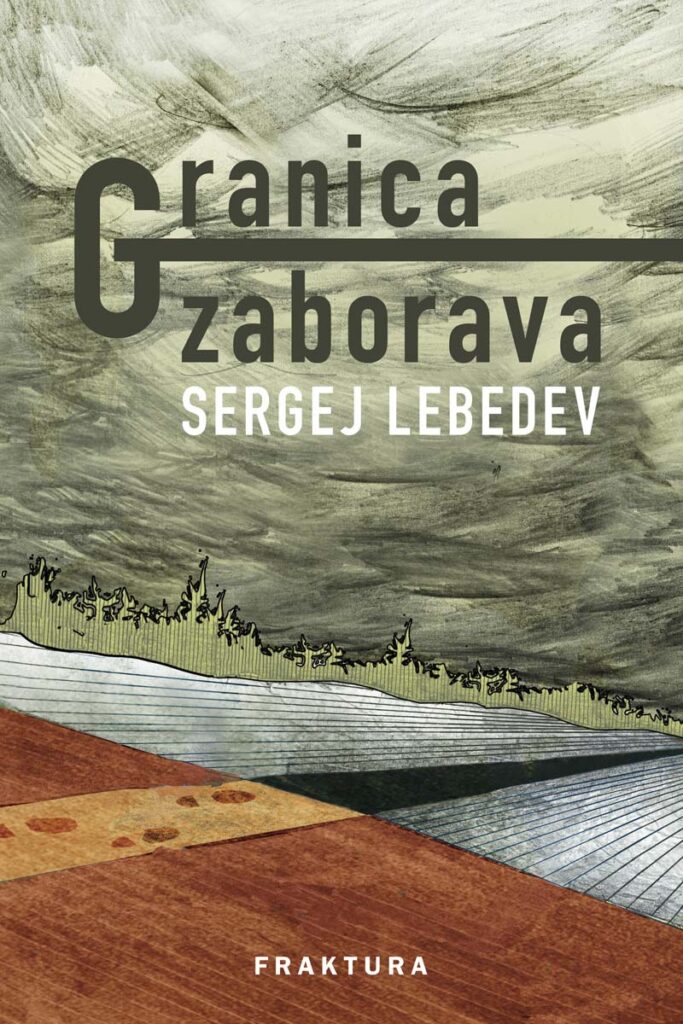
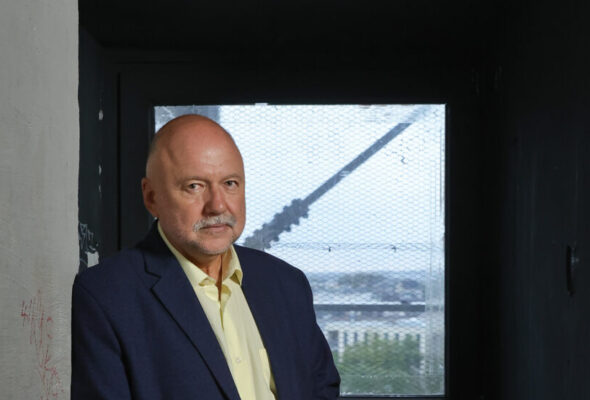
A geologist by training, Lebedev spent seven years on geological expeditions in the North, and then, in his writing, turned to exploring the Soviet past, memory, trauma, and, more broadly, the genealogy of evil in Russia, as well as the consequenc es of the Stalinist era for contemporary Russia. He regularly speaks out against the Russian regime and against Russia’s aggression toward Ukraine, and in his novel “People of August” he writes about Russia in the 1990s, about a time of social upheaval and fracture, and a time when the restless spirits of the past come to light. The Croatian edition of the novel, translated by Ivo Alebić, was published this February by Fraktura, and on that occasion Sergei Lebedev kindly agreed to speak with BestBook.
BestBook: Your novel ‘People of August’ deals with the 1990s, that period often referred to as the ‘wild nineties’. What do you remember from that time, and what was happening then with your family and relatives?
When hyperinflation began and money turned into candy wrappers, my parents were… disorient ed. They had spent their entire lives in the Soviet Union, accustomed to permanent shortages, to a lack of everything in the world. But those changes were too radical for them. And in a strange way, my family psychologically gathered around my pa ternal grandmother, who had been born in 1908 and had lived through both the First World War and the Civil War, and remem bered the latter very clearly. When my parents simply could not cope with the new reality, she would say things like: “I remember how in 1920 my father gave me seven million rubles and said, ‘Natasha, please go to the market and buy a glass of sunflower seeds.’” There was a kind of strengthening magic in that: being near a person who had experienced such chaos, such a collapse of the universe on her own skin, and yet here she was, alive and close to us.
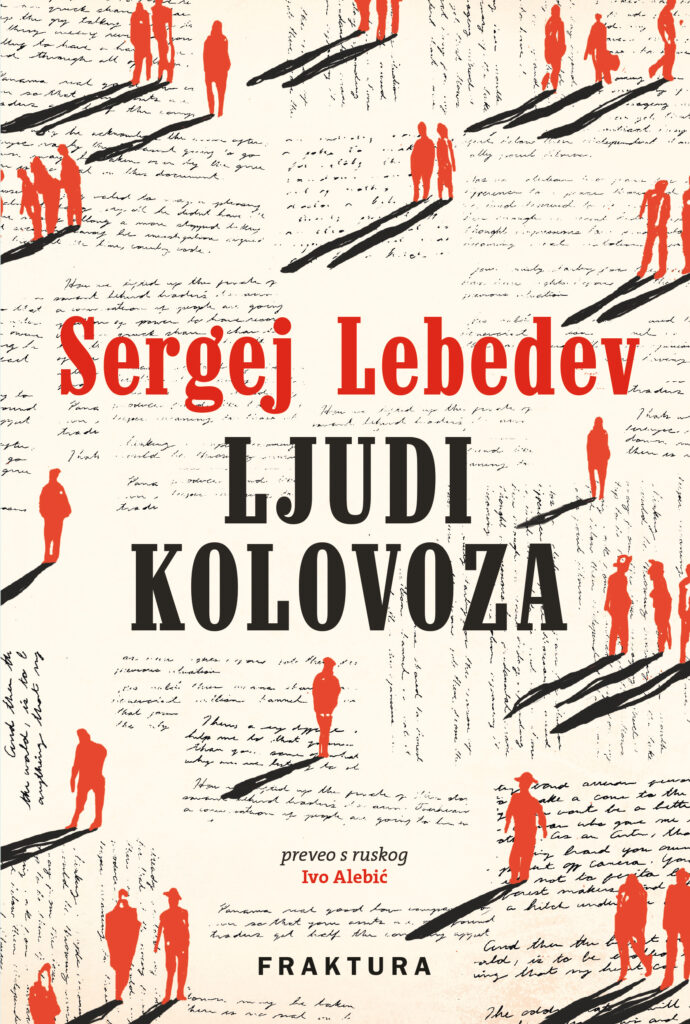
BestBook: The protagonist of the novel travels to distant points of the former USSR in order to find the dead or missing relatives of various people, but above all he is searching for his own grandfather. To what extent did your family experience influence your choice of such a subject for the novel?
Of course, the 1990s were also a time of entirely unex pected discoveries. I lived in the USSR for ten years, and as a child I was convinced that we were a perfectly normal Soviet family: me, my father, my mother, and two grandmothers. What does “normal” mean? That we had no special history, no genealogy – we were Soviet, which meant that we had no other identity and could not possibly have one.
My great-grandfather appeared in the family album already wearing a Red Army uniform from the Civil War period, and it somehow never even occurred to me to ask: who had he been BEFORE 1917? So – Soviet, no relatives abroad, no connec tion to a greater history, no dark stains or secrets in the past… And then in 1993 – this entire story is described in “People of August” – my grandmother, after waiting for two years in order to make sure that the communists were definitively gone, revealed to us her handwritten memoirs.
And it turned out that we were a tiny surviving fragment of a large family destroyed by the Soviet authorities. That we had a history stretching across different centuries and countries, that there were places connected to that history: churches, factories, villas… My earlier quasi-Soviet identity, built on the idea that the family “we” and the state violence of the twentieth century had no connection whatsoever, was reduced to ruins.
And how do you build a new one? When in the place where family history ought to be there is instead a space of loss and everything stolen away, a mass grave? That can probably only be done through art, and in my case through literature.
BestBook: One might say that in the 1990s, from the ruins of the USSR, a new, incomprehensible, unknown state was being born. In your view, how much did the 1990s shape the Russia we know today?
I wouldn’t say that anything at all was really be ing born, let alone something new and unknown. Behind the façade of radical economic change – the economy is the only thing that really changed – it re mained invisible that a new society was not actually born. The Soviet person remained a Soviet person.
Between Russia’s first attack on Chechnya, which wanted to secede, in 1994, and the armed seizure of Crimea in 2014, twenty years passed. These are the Balkan wars in the Russian style: much slower, as if in slow motion, seemingly with interruptions… But the meaning is the same: the so-called “metropolis” is trying to reclaim what it considers its own.
It was precisely that imperial consciousness that became the fertile ground for imperial revenge. You see, people sometimes say that all of this is because of Putin, because he was in the KGB. But in Ukraine, Yevhen Marchuk, a KGB general and head of the Fifth Directorate, which dealt with ideological control, became prime minister even earlier than Putin did in Russia. In the KGB hierarchy, Marchuk stood at an incomparably higher level than Putin, and his intelligence and operational abilities were greater. But the Soviet secret police and imperial ideas did not achieve revenge in Ukraine.
Because that same fertile ground for imperial consciousness was not there.
BestBook: The phrase ‘people of August’ refers to the generation whose lives completely changed after August 1991, and to the generation trying to come to terms with the past, with the consequenc es of repression, and with all the secrets of the Soviet Union. What did that look like in real life?
In real life, it took the form of a rise in urban leg ends: about “evil” houses and apartments, about cursed places, ghosts, apparitions and poltergeists, about black phantom cars on night streets… Un processed, unmourned history returned to popular culture in its most accessible form – in the form of sublime rumors, mystical stories suggesting that the Soviet afterlife was right within our reach… In the form of stories about inexplicable knocking and rustling in houses: as though the past was trying to communicate, as though the victims erased from memory were trying to tell us something, to prove their existence…
It really was a mass phenomenon, whose influence was amplified by the general spirit of the time – mystical feelings tend to pre vail in times of major change. And then those rumors and legends grew quiet, disap peared.
Because of economic changes, fear and dread of the past was very quickly replaced by fear of the future.
BestBook: In your works, you often deal with questions of collective memory and collective trauma. Why do you consider it important to write about such top ics, which many people would very gladly forget?
I would put it slightly differently. Trauma and mem ory are very broad categories. What matters to me is something else. Memory of the victims alone is not enough. Responsibility is needed, punishment for the perpetrators is needed. Without justice being carried out, the past will repeat itself.
And in Russia, this very question of reckoning with state criminals has always been covered up. Even liberal dissidents during perestroika believed that Russia did not need lustration or any other “transitional justice meas ures.”
That is why I keep coming to that door and ringing that bell called “retribution.” And already now I can see how, unfortunately, Russian society is gradually discursively freeing itself of responsibility, as if the war were catastrophic for it too – as if that same society were not directly or indirectly involved in the war. And if you count all those employed in industry, transport, and so on, that is already many millions of people.
I can predict exactly how later on – even among Russian liberals – the thesis will become popular that only Putin is guilty of the war. Just as the Germans shifted all the blame onto Hitler.
BestBook: The last time we spoke was about half a year ago. Since then, the fourth anniversary of the beginning of the war in Ukraine has passed, and another war has begun as well. Has anything in your view of the world changed in that period?
I am witnessing the reform of the Bundeswehr in Germany and the return of compulsory military ser vice, at least in part. I see mass protests by school pupils and students against conscription. And in parallel I am studying how war has transformed education in Russia. How hundreds of thousands – literally hundreds of thousands – of schoolchildren are learning to operate drones, how right before our eyes infrastructure is being created in schools to train future drone operators – all of it with war in mind. And I still cannot under stand why the younger generation in Germany is so naïve, so unwilling to give up the illusion of a comfort able world in which only gas and oil come from Russia.
BestBook: Various negotiations are taking place aimed at ending the war in Ukraine, but the war nevertheless continues. What is your opinion of those negotiations? Is the end of the war really near, or are we still far from it?
I think that, unfortunately, regardless of the outcome of the negotiations, Putin cannot be trusted. Any agreement with him will not be worth the paper it is signed on. The only relatively solid guarantee that a peace agreement would actually bring peace is for Putin to be in prison or in the grave.
BestBook: How do you view the role of Russian liter ature in today’s world? We have already seen sever al attempts to ban Dostoevsky, Tolstoy, and other Russian classics. What do you think about that? What position do you take?
Russian literature and, more broadly, Russian cul ture is the last imperial culture in the world that has never gone through decolonial criticism. In that sense it is an astonishing relic. The point is not to ban everything literally. The point is that much in Russian culture, or culture in the Russian language, needs to be reconsidered. And above all, this very complex of imperial arrogance that makes it possible to look down on one’s neighbors.
This may not even be a question of par ticular texts or authors. It is about a general rejection of the concept of the “greatness” or “significance” of Russian culture – its defeat. Be cause it is – in an indirect but clear sense – precisely the concept of the greatness of Russian culture that, on its reverse side, contains chau vinism and imperialism, milita rism and aggression: “we” have the right to tell you how to live because “we” are better or more cultured than you.
BestBook: You worked in Kyiv af ter 2014. How did that affect you? How did you feel in that period?
I felt ashamed. The Ukrainian army had already lost thousands of soldiers, Crimea and the East were occupied, and in Russia everyone pretended there was no war at all, and continued cooperating with the Russian government. Almost the entire political opposition in Russia, including Alexei Navalny, condemned corruption as the main evil of Putin’s regime. But not the war against a neighboring state, not the violation of international law. The opposition always claimed that ordinary Russians were suffering under the oppression of Putin’s regime. That Putin in fact did not have many supporters. But at the same time they were afraid to condemn the war against Ukraine, because they knew that that war and the occupation of Crimea had made Putin very popular.
And in Kyiv, at the memorial to the fallen soldiers, new photographs were appearing almost every day. At the same time, it seems to me that even the Ukrainians themselves found it psychologically difficult to admit that Russia had become a sworn enemy; there was still some hope that Russia would come to its senses. That hope was lost on 24 February 2022.
BestBook: What can ordinary people do in the world we live in today? How much influence can they have on everything happening around them?
I will speak about Vladimir Putin, but what I say can easily be applied to other figures in global politics. Putin wants us to be afraid. Whether we are in Croa tia or Germany, Latvia or Georgia, he wants us to be afraid. He knows only one instrument of control, of interaction with the world: fear. That is why he con stantly attacks civilian infra structure with missiles, why he kills civilians, why this winter he is trying to freeze Ukraine… He is a salesman of fears; he wants Europe to live in fear, to be divided and incapable of resistance. And fear always begins in the human heart. That is why each of us can do a great deal: not allow fear to take power.