The art of leaving things out
Gerbrand Bakker’s fiction is defined by minimalism, eerie silence, and lonely characters searching for a way out of their lives
When the Polish writer Andrzej Stasiuk visited Croatia some fifteen years ago, he put forward a couple of extremely interesting ideas. One of them was his comparison between Central European and Western literature: in his view, Central European literature is oriented more toward the world and toward reality itself, whereas Western literature is more self-oriented, and “is in danger of soon devouring itself.” His second claim deserves to be quoted in full: ” For many years under communism we lived in a state of great expectation and longing for the West, which was inaccessible to us and to which we could not travel. While waiting for it, we immersed ourselves deeply in Western culture. We were not there, but we functioned within an imaginary Western world. And when it finally became accessible to us, our interest declined. Today I am bored in the West, be cause I have the feeling that everything I can see there has long since been described and that the West is an exhausted subject. For example, the beautiful harmony of civilization, culture and nature in Tuscany made me feel ill after a week.” In that sense, Stasiuk said he went to the West as a writer, in order to earn some money from writing, but that for him a journey to Albania, for instance, was a far greater intellectual challenge. What lends cred ibility and weight to Stasiuk’s words is the fact that he is a writer whose works are translated in the West and who seems, at least to some extent, immune to literary fame.
The cracks in Stasiuk’s theses, with which I largely agreed, were first opened for me – at least from my own perspective – by the novel “The Twin” (“Boven is het stil – It Is Quiet Up There”, in literal translation) by the Dutch writer Gerbrand Bakker, which I read a few years after that interview with Stasiuk. It is a great novel that doesn’t practically speak about anything in particular. Bakker, or so it seemed to me, with his unpretentiousness and minimalism, actually restored a shaken faith in the power of literature as an aesthetic category. (In the meantime, the mythical West has changed completely and, I would say, irreversibly. Instead of Stasiuk’s “beautiful harmony of civilization, culture and nature,” we are now watching footage from Ukraine, Gaza, Iran… The Kunder ian unbearable lightness with which the West today relativizes the deaths of more than a hundred Iranian schoolgirls, while Gaza and the tragedy of the Palestinian people have turned into a field of cheap and shallow activism, to cite just the two most recent examples, freezes the blood somewhat through its callousness. As a result, European literature should no longer be “boring,” which makes Stasiuk’s theses somewhat collapse.) Where, then, do the roots of Bakker’s minimalism lie? Bakker, who is by profession a licensed gardener, claims that writing and gardening are compatible. This seductive thesis can also be applied to his work, which seems to me to consist of carefully removing excess, of pulling up the “weeds.” “Those two things work well together. In autumn, when I rake dead leaves, I can do it for hours – once I even disturbed the pile I had already made just so I could go on raking. The sound is so wonderful: it lets you think subconsciously, in the subconscious,” he once said. Another detail from Bakker’s biography confirms this thesis. Before publishing “The Twin”, Bakker did various precarious jobs. Among other things, he wrote subtitles for the American soap opera “The Bold and the Beautiful”, shown on Dutch television. He described that experience as follows: “They chatter and chatter, but you only have seven seconds for a subtitle on the screen. That’s what ‘The Bold and the Beautiful’ taught me. It taught me to leave things out.” Such an approach irresistibly recalls the practice of the American minimalists, such as Raymond Carver, who had a scrap of paper pinned to the wall in front of his desk that read: “No tricks.” “Writers don’t need tricks and gimmicks, nor even the basic need to be the smartest person in the world. When he senses he may be in danger of seeming foolish, a writer should from time to time be able to stop and look at something – a sunset, an old shoe – with a sense of absolute wonder,” Carver wrote in his poetics-inflected book “Fires”.
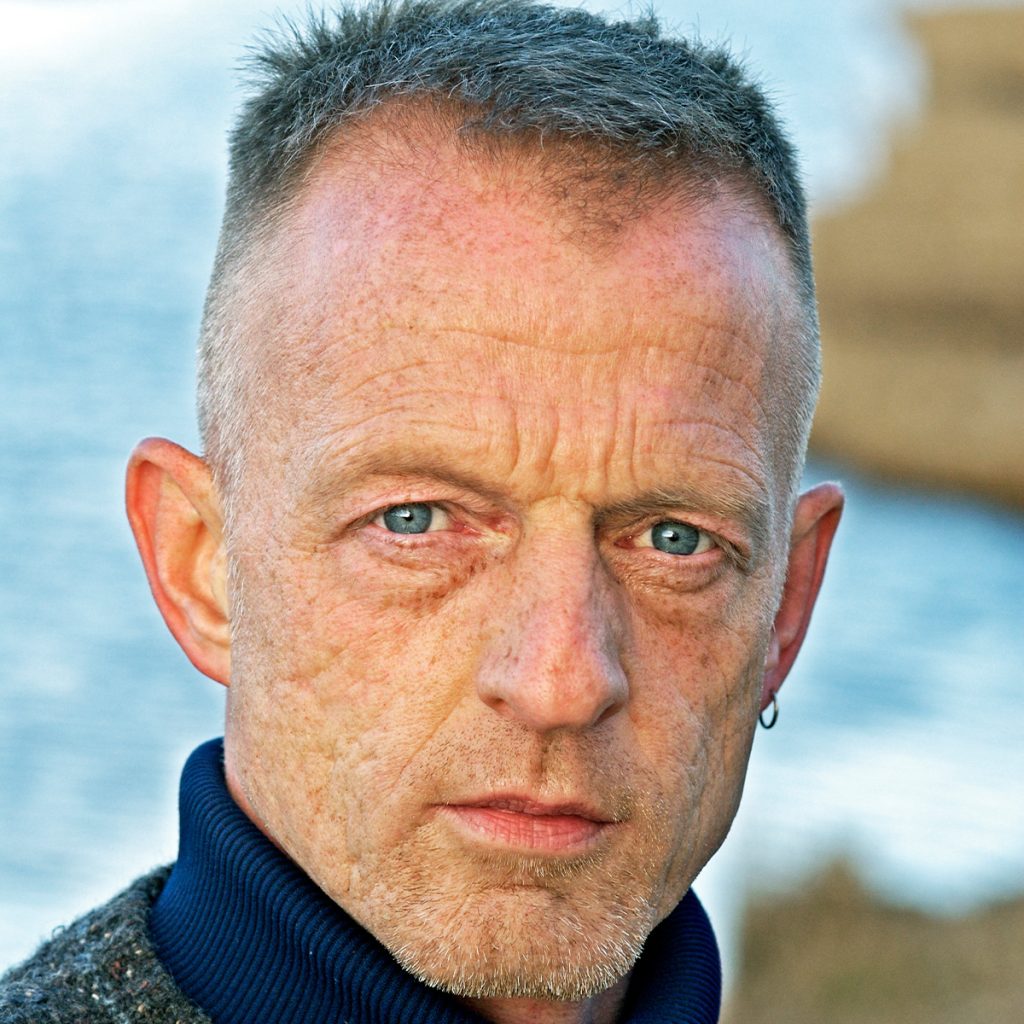
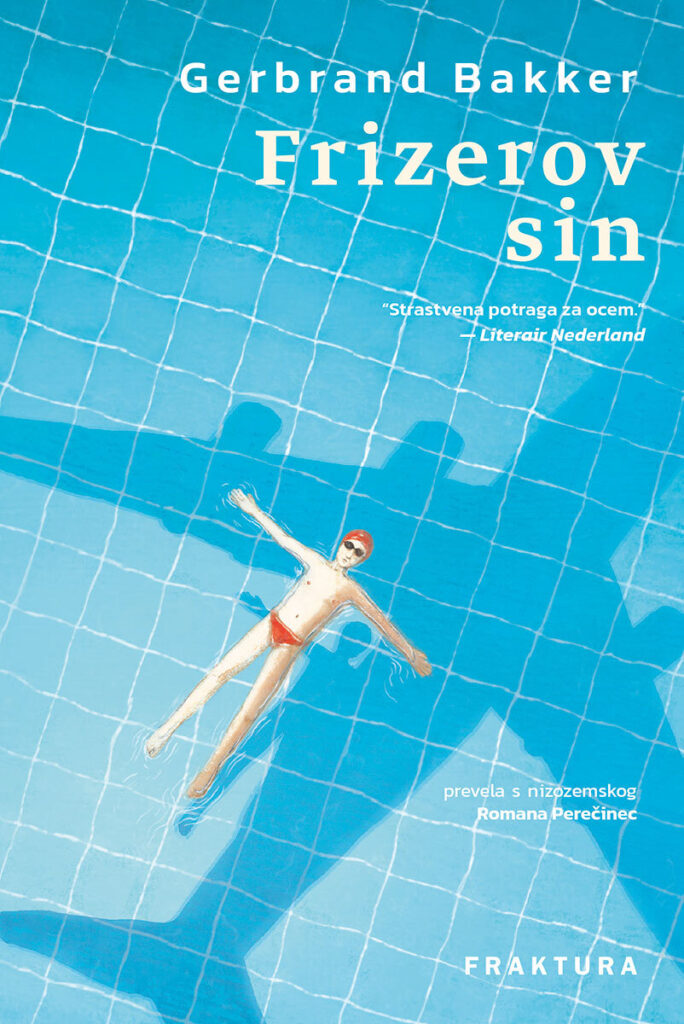
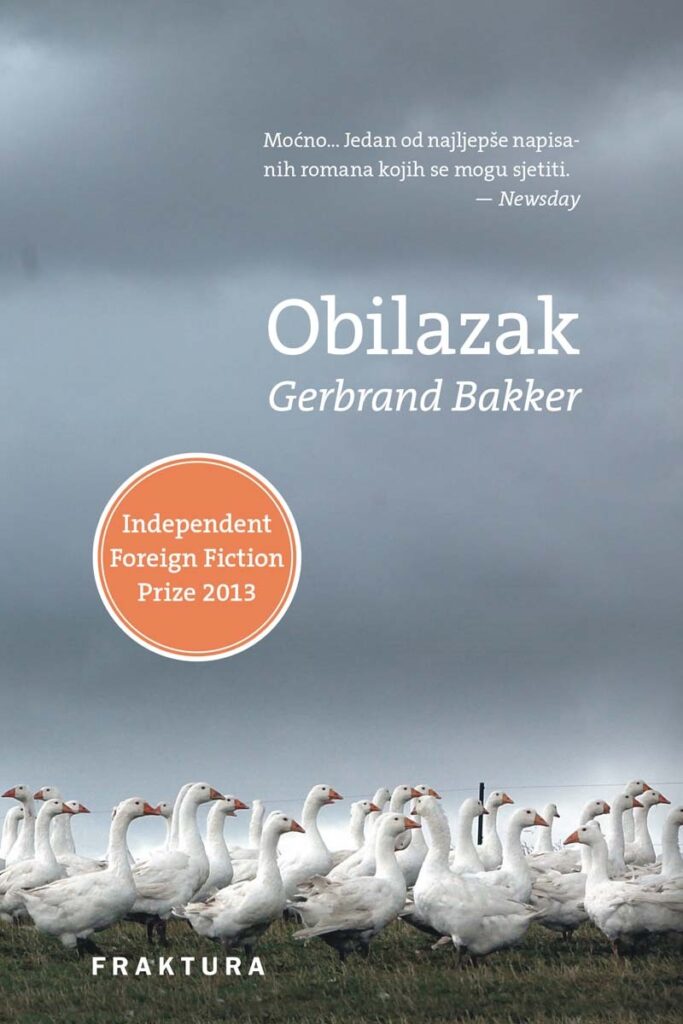
Born in 1962, the Dutch writer Gerbrand Bakker became internationally recognized af ter his debut novel “The Twin” received the International IMPAC Dublin Literary Award in 2010, the richest international prize for an individual work of fiction in the world, worth 100,000 euros. The prize is unique also because public libraries around the world nomi nate titles they believe should win. It is equally important to mention the courage of the jury, which year after year has discovered great new names in world literature. “The Twin”, for example, was the third consecutive debut novel to win the award, after “Man Gone Down” by the American writer Michael Thomas and “De Niro’s Game” by the Lebanese writ er Rawi Hage. Bakker’s novel, published in English under the title “The Twin”, was nominated by libraries in Amsterdam, The Hague, Utrecht and Eindhoven. In its citation, the jury described Bakker’s minimalism as “quiet mastery”: “With quiet mastery the story draws the reader in. The writing is beautiful: restrained and lucid, yet full of the details of rural rhythms in the cold, damp Dutch land scape.” Three of Bakker’s novels are available in Croatian transla tion: “Gore je tiho” (“The Twin”), “Obilazak” (“The Detour”), and, most recently, “Frizerov sin” (“The Hairdresser’s Son”), published last year. All three were published by Fraktura; the first two were trans lated by Maja Weikert, and “The Hairdresser’s Son” by Romana Perečinec.
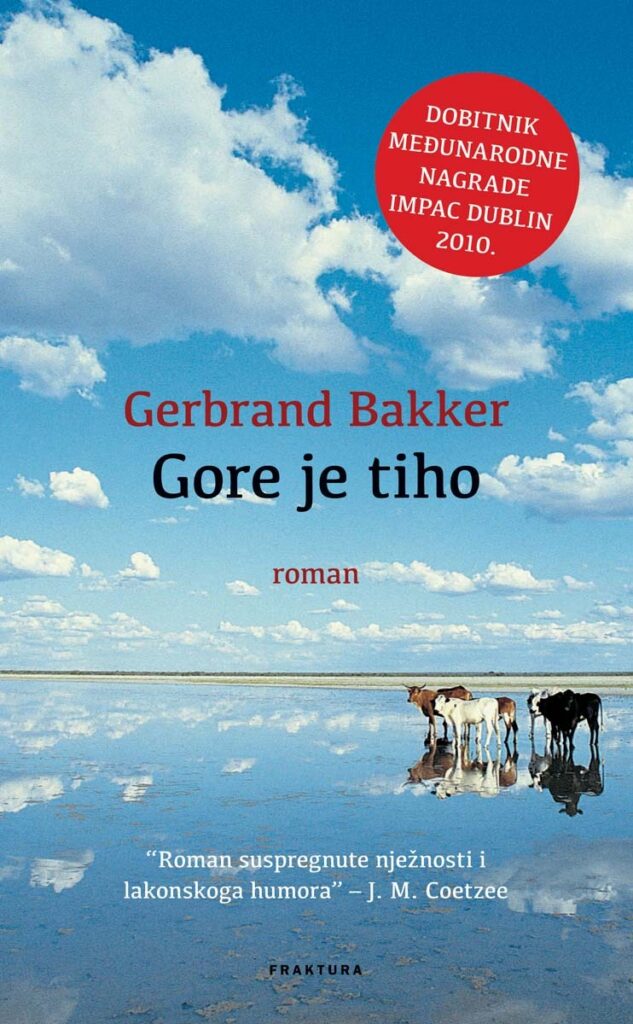
Bakker got the idea for “The Twin” in 2002 while on holiday in Corsica. He was thinking about a son who might “do something terrible to his father.” Four years passed between that initial idea and the final version of the novel. By his own account, Bakker was frustrated because for a long time he could not move beyond the novel’s basic premise. “For months it stayed in my head and I was so frustrated – nothing happened with that idea. Then I simply sat down and started writing. I didn’t know where I was going, I just began – for me that is a good way of writing,” he said. “The Twin” deals with themes such as loneliness and isolation in the con temporary world. An important strand of the novel is also its treatment of a deeply rooted sense of duty. The novel’s protag onist and narrator is Helmer van Wonderen, who, some thirty years earlier, had been forced to return from university, where he had been studying literature, to the family farm in a desolate Dutch village, a place where time seems to have stopped, after his twin brother Henk was killed in a traffic accident. “Henk and I were born in 1947, I am a few minutes older. At first, they thought we wouldn’t survive the next day (24 May), but Mother never stopped believing in us. ‘Women are made for twins,’ she supposedly said when she first breastfed us. I don’t believe that; it sounds more like one of those remarks that emerges from a larger cluster of events and statements – much was said at the time, of course – and over time survives on its own, detached from context, most likely a distortion of something Father or the doctor said. Mother herself probably said very little.” At one point in the novel, Helmer has a framed map of Denmark hanging on his wall, a country that for him represents a place of escape from his bleak and predictable everyday life: “I went out into the pasture to count the sheep. Whenever I see a sheep, I am always a little depressed. They are such mournful animals. I often think of the three sheep I sold in order to buy the map of Denmark, above all because I never even looked to see which three sheep I was selling. (…) I think of Denmark while holding the other part in my hands as I go down the stairs.”
Helmer lives on the farm with his stern and authoritarian father, his mother having died a few years after his brother. The relationship between father and son is cold and tense, since Helmer has always believed that his father loved his brother more – the brother who was meant to inherit the farm. Helmer never married and remained tied to the farm all those years, milking dairy cows twice a day, every day, for decades. His dying father lies upstairs in the family house: the “up there” of the original title refers to the room where Helmer’s father is dying. Helmer encounters the former girlfriend of his twin brother, who asks him to help care for her teenage son – also named Henk – who, unlike Helmer, is carefree and without any sense of responsibility. The unexpected arrival of a third person in the house changes things and forces Helmer to think about his relationship with his father and his dead brother, and also about his own future once his father dies. At the end of the novel, after his father’s death, Helmer, attempting both to escape from himself and to give meaning to his life, goes to Denmark.
The defining feature of “The Detour”, published in Croatia in 2016, is, as in “The Twin”, its minimalism and its lethally slow yet perfectly controlled pace. But those are not the only points of contact between the two novels. “The Detour” is likewise a story about loneliness, set in an empty landscape, in the timeless world of rural Wales. The novel’s protagonist and narrator is a middle-aged wom an who introduces herself as Emilie, though that is not her real name. Emilie has fled the Netherlands, and Amsterdam, where she lost her position as a university lecturer after an affair with a student, once anonymous messages were left around the university calling her a “heartless bitch” who had seduced a first-year student. Emilie was ac tually on her way to Ireland. Yet on the road there she stops in north western Wales, rents a cottage, and stays. By Bakker’s own admission, “The Detour” grew out of a “very depressive” period in his life: “I write instinctively. Something wants to come out. Only now do I see that this book is terribly much about myself. I write from the subconscious. I don’t see what I am doing.” The name Emilie was borrowed by the nar rator from the poet Emily Dickinson, whose portrait and collected poems she brought with her from Amsterdam. On the isolated rural property she is accompanied only by ten white geese, which mysteriously disappear one by one, further feeding Emilie’s fear and uncertainty. (The American translation of the novel was in fact titled after this motif: “Ten White Geese”.)
Even though Europe has changed beyond recognition from 2006, when “The Twin” was published, to Bakker’s most recent translated novel “The Hairdresser’s Son”, originally published in 2023, the literary world of Gerbrand Bakker remains the same. His characters seem to live in a parallel world, one barely touched, if at all, by the echoes of the reality in which they live. The protagonist of the new novel is Simon, a forty-year-old hairdresser who has continued his father’s trade and is obsessively seeking the answer to a question that has tormented him all his life, connected with the disappearance of his father Cornelis, who, before Simon was born, secretly packed his things and abandoned his wife and unborn son. When, in the terrible plane disaster of 1977, when two passenger jets collided at Tenerife airport, almost all the passengers died, Simon’s father was listed among the dead. More than forty years later, Simon, who works as a hairdresser just like the father he never knew, is finally ready to confront the trauma of his father’s disappearance. His mother never spoke to him either about their marriage or about Cornelis, but she never remarried or had another partner either, and Si mon has spent his entire life sensing that something was being hidden from him. Why did his father secret ly leave on that journey? Why did he abandon his wife and unborn child? The body was never identified. Was he really on that plane? Alongside the search for his father, Simon lives a dull and monoto nous life, drinking large quantities of espresso and changing casual lovers, among them the Writer, a middle-aged, unsuccessful author through whom Bakker also comments on the literary world. The Writer’s greatest achievement in life is a panel discussion on which he once appeared alongside the con temporary German author Daniel Kehlmann, who, according to him, “was a disappointment.” The Writer also speaks ironically about a literary appearance in Marseille, saying that he had travelled almost a thousand kilometres to speak in front of eleven people – or maybe twelve, he is no longer sure. This novel too, like the previous two, has that deadly slow but finely adjusted rhythm, though in “The Hairdresser’s Son” it does accelerate some what in the second half.
Besides their recognizable style, Bakker’s novels share a number of recurring motifs, the most important of which is the attempt by middle-aged characters to escape their dull and monotonous lives. Helmer from “The Twin” leaves the farm after his father’s death and departs for Den mark; Emilie from “The Detour” flees Amsterdam for “mythical” Ireland, only to strand herself fatally on the picturesque coast of northwestern Wales; Simon’s search for his father is, for him, also a kind of escape from reality and a search for meaning in his own life. The visible lack of emotion in all these char acters is another hallmark of Bakker’s fiction, one that at times creates an almost eerie atmosphere – as, for example, in “The Twin”, when Helmer describes in almost documentary fashion, and without any emotional engagement, how his sadistic father kills kittens on the farm. About his mother he writes, in a somewhat Camus-like tone: “Mother was an outrageously ugly woman. To some one who didn’t know her, the photograph on the mantelpiece above the fireplace is probably funny: a bony peasant woman with bulging eyes and the hairstyle of a woman who goes to the hairdresser once every four months and is doing her utmost to strike an elegant pose. I do not laugh at the pho tograph. She is my mother. But I used to wonder why Father – who, when he is not asleep, is almost certainly staring at his attractive self in photographs from long-gone days – married her. Or no, now that I have been looking at her picture for some time and thinking about the man upstairs, I wonder why she married him.” In “The Hairdresser’s Son”, Bakker describes the relationship between Simon and the Writer as one almost entirely devoid of emotional connection, while Simon’s homosexuality is not emphasized at any point, as is so often the case in novels that deal with homosexual identity. In truth, all of Bakker’s protagonists are connected by a cold, almost uncan ny estrangement, through which Bakker, in his own way, speaks about Europe – a Europe that, it seems to me, does not differ in the slightest from our own perception of Europe today. If that is so, Bakker’s novels also possess a certain allegorical quality, and one might even see them as a strange variation on Dutch magical realism.