Apocalyptic visionary leaves a chilling mark
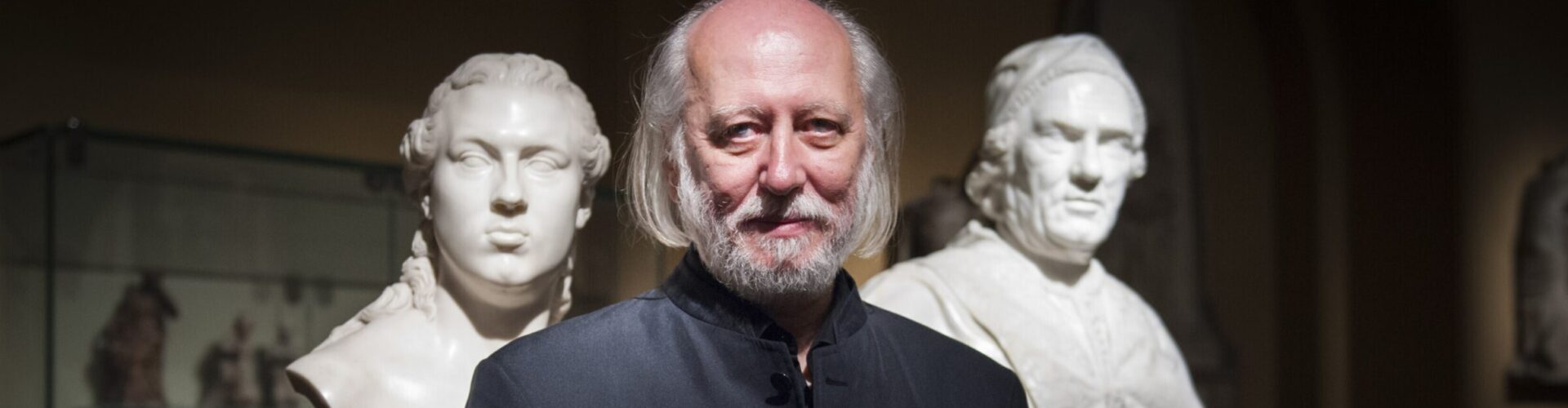
Despite his advanced age and fragile health, the greatest contemporary Hungarian writer is far from saying farewell
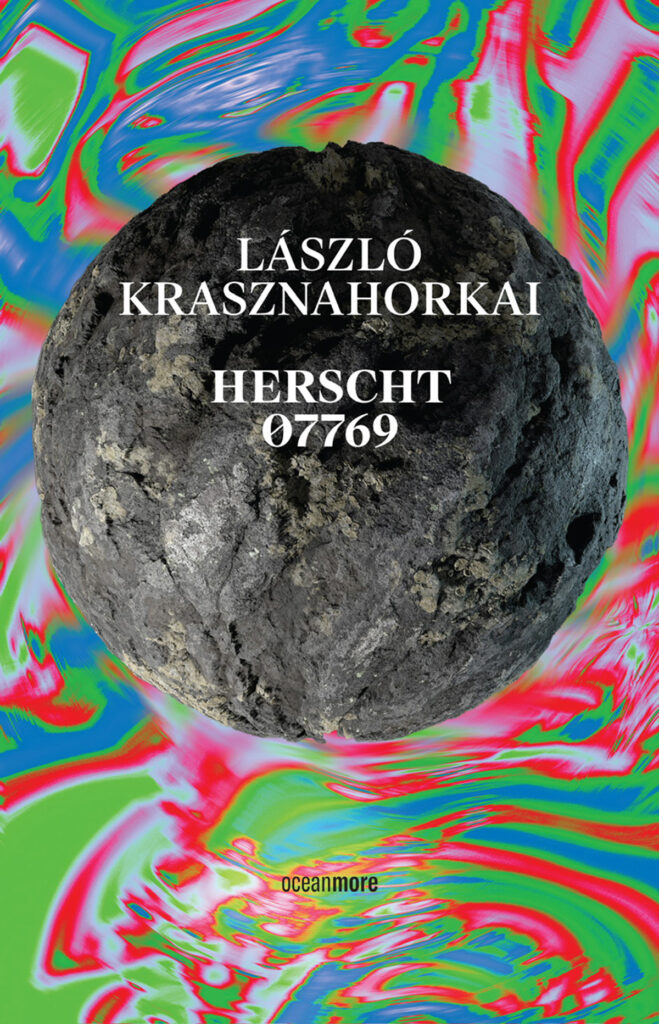
“Herscht 07769”, subtitled “A Novel on Bach by Florian Herscht” and, almost ironically, “A Story,” is in any case – a story, but about the writer’s “second homeland,” from which, after many years of living in Berlin, he eventually returned, to his native Hungary. Although he supposedly took leave in his previous novel, “The Return of Baron Wenckheim”, presenting it as his last, he nevertheless decided to write the long-desired novel about Bach, or rather about everything that by its nature has nothing at all to do with Bach. After that he wrote two more novels that have not yet been translated into Croatian, but given the dedication of the Croatian publisher OceanMore and Krasznahorkai’s translators, there is reason to hope that this too will happen soon. So, despite his advanced age and fragile health, which caused him to avoid traveling for years, the greatest contemporary Hungarian writer (and at this moment one could also say European) is far from saying farewell. News of the Nobel Prize has often been accompanied by a statement from Susan Sontag, who called Krasznahorkai “the master of the apocalypse.” The writer himself accepted that resonant title, as did many who used it to describe the world of his books – the world of perpetual trembling instability, of a subtle unease that regularly, at some moment, grows into general collapse, into a vortex of catastrophe and plague resembling the biblical kind.
Only his tremors are not global in scale nor biblical in reach; these apocalypses take place in Central European lowland provinces that,
in truth, no one outside them cares about very much. And yet everything in those local apocalypses is so immense that they read as though they could at any moment engulf the whole world.
Although it is often interpreted that way, apocalypse does not originally mean the end of the world, but a new beginning. “The Croatian Encyclopedia” gives the following definition: “apocalypse (Greek ἀποϰάλυψıς: revelation), a literary work containing a prophetic vision of future historical events, especially the end of the world.” In the Christian tradition the term is linked to hope for the future: liberation, the end of suffering. The only problem with applying such an optimistic key is the doubt in the idea that we live in a world in which the absence of suffering is possible.
From neo-Nazi dens, Bach is playing.
The idea of a new beginning is the premise of this novel, in the most literal sense. Herscht is the surname of the main character, Florian, and the code from the title is the signature on an envelope he sends to the then Chancellor of the Federal Republic of Germany, Angela Merkel. Why does an odd young man from a small town in Thuringia write to the chancellor and ask her to convene, at the very least, the Security Council? The reason is simply literarily brilliant, because the poor wretch is warning the chancellor of nothing less than the possibility that something like the Big Bang might happen at any moment and any second, just as, after all, it did happen at one moment, though no one knows why precisely that moment was more significant than any that preceded it and why, he concludes, it would be more significant than any moment still ahead of us in this age, in this century, and right now. He is not addressing Angela Merkel merely as the woman at the head of state, but as a physicist who ought to understand the state of things, if she has not already become aware of them herself. A baker by trade, with only elementary school and vocational secondary school completed, Florian learns about the origin of the world from Professor Köhler, whose evening-school physics lessons he attends. And that school is located in Kana, a fictional German town with all the features of Krasznahorkai’s well-known province: crude, grotesque, and yet good-natured to the point of naivety. “Herscht 07769” thus functions as the German counterpart to “The Return of Baron Wenckheim”, in terms
of temporal and broader political context, and in terms of the echo of current events in those uncanny worlds.
So is the case with Kana, where Florian appears without any of the townspeople knowing anything of this boy’s past; withdrawn and socially crippled, gentle and simple-minded like a child not especially bright. A certain Boss takes him under his wing and moves him in with the other outcasts who work for him in a house he calls Burg, where under the name the Kana Symphony Players they revive the memory of the greatest composer from the Thuringian region, Johann Sebastian Bach, along with the greatest evil that happened to Germany, while invoking the Fourth Reich. Dear to the Nazis because of his “pure” descent as the offspring of a distinguished family with roots
in Germany stretching across generations, Bach is for Boss an almost godlike figure, though in fact only because of the accident that he was born in a nearby province; which is, after all, the essence of the whole absurdity of patriotism, which always rests on violence and someone’s suffering. The darkest thing always spreads from immediate proximity.
The comparison is already an unpleasant cliché, but the novel truly is like a skillful composition; not in that generalized sense in which the term is used merely for a firm and meaningful structure, because here it is a matter of a complete and astonishingly synchronic layering of time, space, characters, and consciousness, so that it is not about a smooth and seamless blending, but about reading the novel the way orchestral music sounds: as a single, attuned whole. And within it is the portrait of a place where Bach’s legacy is defaced by graffiti, where types like Boss go unpunished for various criminal acts, including the rape of women from the neighborhood. It is not a place in which people are devoid of empathy; librarians even care for outcasts like Florian with a maternal concern, but people are, as anywhere else, just as horrified by the evil of nationalism as they are mute before it when it is unleashed. It is a place where Bach plays from piss-soaked neo-Nazi dens, a Germany in miniature, which is finding it ever harder to muffle, with its enviable cultural heritage, for which it does not deserve much credit, the whole sediment of a fundamentally xenophobic mentality, for which it bears a very great responsibility. The apocalypse is once again entirely local; that epochal reversal does not come through some new Big Bang, through the accidental simultaneous birth of a billion particles and antiparticles, nor does it come by God’s will, but from within, out of evil to which the only answer becomes evil once again. It seems more likely that the Nazi idea will flare up again and turn German citizens into cold-blooded criminals, so that the familiar world vanishes once more, than that physics will take care of it. Florian Herscht, in this fantastic, brutal, and insane ending, is a precise and masterful contemporary tragic hero, a child of Europe: in that sense, of pure blood and bloody hands.
“However, if we do not understand this, or do not do something for the sake of the Earth as such, something we can set against this fact, then we are finished, and we can only wait for the end to come to the world, the universe, the whole, to that Something, which will finish us too, but we cannot wait for the apocalypse with folded arms, rather we must understand,” Florian wrote to Chancellor Angela Merkel in Berlin, “that apocalypse is the natural
state of life, of the world, of the universe, of that Something, and apocalypse is now, Madam Chancellor, it is what we have been living in for billions of years.”
For billions of years, only to inspect one’s genetic heritage and peer through other people’s windows. Nobody describes the absurdity of civilization as well as Krasznahorkai; so well that one has to read him with pleasure and anguish at the same time.