Karakaš: I was to be a priest or an officer
Damir Karakaš spent two years on the front line defending his native village in a HOS uniform. We spoke with him about his novel 'Sunčanik'
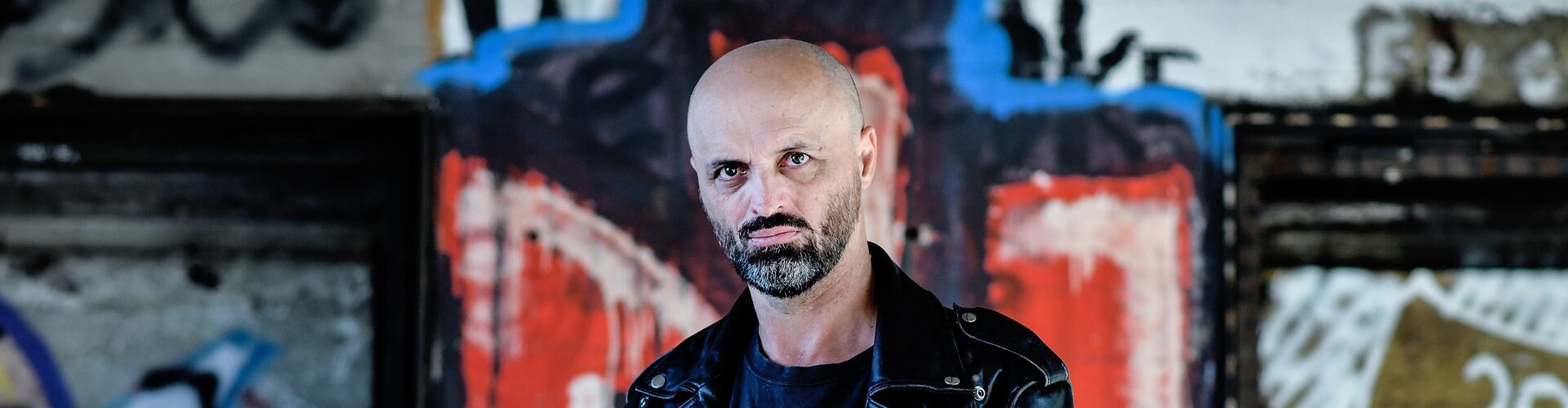
Born in 1967 in the village of Plašćica near Brinje, in Lika, Damir Karakaš, one of the most highly regarded contemporary Croatian writers, has never followed the usual life paths. In Zagreb he began studying agronomy, only to eventually earn a degree from the Faculty of Law. For two years he defended his native village on the front line, and through a twist of circumstances wore an HOS uniform; and before devoting himself fully to literature, he worked for several years as a crime reporter and reported from the battlefields in Croatia, Bosnia and Herzegovina, and Kosovo. He lived in France for seven years, where as an emigrant he played the accordion in the street, engaged in performance art, and exhibited conceptual works. To date he has published around fifteen books, including novels, plays, and short-story collections. In addition to a distinctive Lika idiom and rural subject matter, his works are recognizable for their stylistic spareness and uncompromising confrontation with personal and collective traumas. A passionate reader of classics such as Dostoevsky, Tolstoy, and Kafka, Karakaš despises the commercial industry and show-business nationalism. We spoke about his literary, wartime, and life experiences, starting with his most recent novel, “Sunčanik”, for which, seeking an authentic experience, he crossed the Velebit mountains on foot.
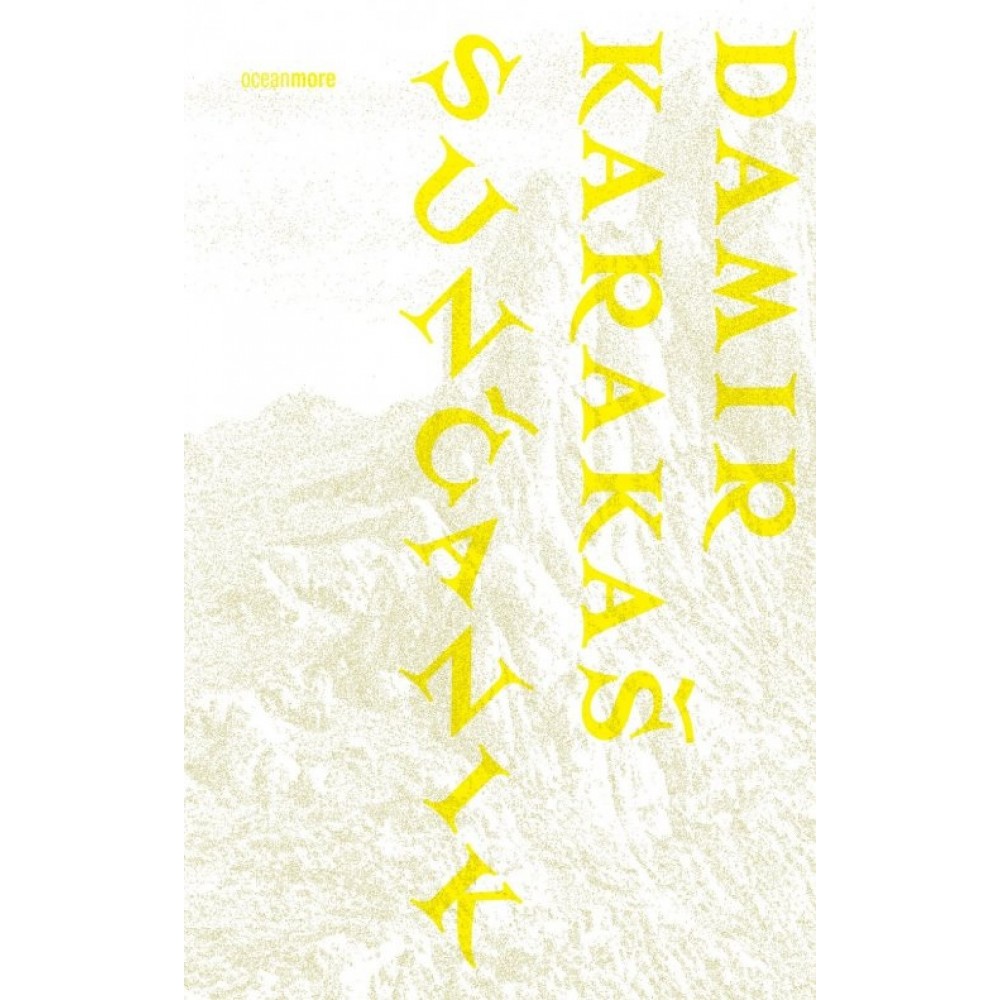
BestBook: You once said that established prose forms do not attract you. In your latest novel, ‘Sunčanik’, stylistic changes are noticeable: instead of your recognizable short sentences, you write with a slower, more expansive sentence rhythm. How did that shift in your language come about?
It’s no great wisdom that every theme in some way dictates its own form, style, sentence; but when writing, many other things matter to me too, for example: associations, dissonances, transitions and contrasts, achieving a perspective of the whole; yet most often I give birth to a text the way a tree gives birth to a Lika plum – every few years, no one knows how or why. And language is especially important to me in literature; sometimes it has to be like a hedgehog’s spine, as Remizov once put it beautifully; Remizov, who liked to cut little devils out of paper and hang them from the ceiling of his tiny room. I love that guard of writers – Tsvetaeva, Akhmatova, Remizov, Platonov – writing as a matter of life and death. I also have to say that I am by no means one of those writers who has been writing since the age of five; I never had that need. I drew, I painted, I hung paintings in the plum orchard, I played the accordion a lot, I frightened wolves away with that playing; even now I don’t write every day – I haven’t written anything for months. I’m more of a tavern writer: I drink and wait for an epiphany. I don’t take money in advance, I don’t aim for what’s fashionable, I don’t work to order, I don’t even commit to finishing a novel – everything with me is always uncertain. It matters to me that my books be on the side of humanity; I cannot read Adolf Hitler’s love poems. Language is also very important to me: as Adam Mickiewicz says, language lies to the voice, and the voice lies to thought. I also learn a lot, and I have from whom to learn, because whoever does not constantly surpass himself rots and falls apart like a rotten pineapple in the trackless wastes of Lika.
BestBook: In ‘Sunčanik’, a boy and his grandfather search for the devil who looks “like a man” and “can enter into any man.” Where in the novel is the boundary between metaphor and reality?
In “Sunčanik”, it was important to me above all to try to discover certain metaphysical and poetic secrets, and, when all is said and done, sometimes to enter along their path into the spheres of philosophy as well, because the old man in the novel is a kind of philosopher; there is no other way to answer the boy’s seemingly simple questions. And philosophy is worth only as much as it tells us that writing is a great reason for existence, and, as Mallarmé says, that the book is the greatest value; it is the foundation, everything begins with it, and when there is no book, there will be no world either. There are also quite a few references: “Battleship Potemkin”, Tarkovsky, Lynch, Bulgakov, Mahler’s music, 1970s Japanese jazz. Dreams matter to me too: that my novels be like Kafka’s – precise descriptions of dreams; in the novel I also try to show that there is no essential difference between dream and waking life. Here I must mention two more things: imagination and friendship. The boy and the grandfather walk through the forest, because in the “Divine Comedy” all those stories about hell and heaven are a chronicle of Dante’s and Virgil’s friendship.
BestBook: What could be a bigger problem today: that we do not recognize the devil, or that we recognize him but accept him as something completely normal?
That should be asked of Dostoevsky, of whom Cioran says that he is a writer with an enormous deficiency and the radiance of holiness. For him he is the greatest writer, although Kundera and Nabokov do not like him. Nabokov says Dostoevsky is a writer of Russian crime novels, but he is grievously mistaken. Dostoevsky is a prophet; Anna Akhmatova says of him: the Omsk convict understood everything and put a cross on everything. His life was a dance in hell; he was in a dangerous dance with demons. Cioran speaks of that too, when he says that he experienced every temptation and that his life was a series of misfortunes; he went to the furthest limits. According to Cioran, there are other writers who went all the way to the very end: Nietzsche and Baudelaire, who also crossed every possible border. Just look at old photographs of our great-grandmothers and grandfathers: so young, and yet full of wrinkles. Because each wrinkle was a blow in life.
BestBook: ‘Sunčanik’ was published a few months ago: enough time for first impressions. What reactions have you received from readers? Have you received them at all?
The reactions from both readers and critics are excellent, I’d say the best of all my books so far, which can be seen on the OceanMore website where all those reviews are collected; so maybe that is a message to me to stop writing, because from now on I can only get in the way of my own work. I would be lying if I said I’m not glad, especially because many colleagues reach out to me too. Just the other day our celebrated basketball player Zoran Čutura got in touch; he says “Beckett waits for Godot, you look for him in your novel” – that pleased me. I used to imitate him when, as a kid, I played basketball in my village – not Beckett, but Čutura – threading the ball through a bicycle wheel, because there was no real hoop, and dreaming that maybe one day I could play basketball. I would also be lying if I said readers are not important to me; what would all this be for then? And just as there are good and bad writers, there are good and bad readers. Reading is very creative; even when we reread a book, we shape it again in a new way. But between the text and the writer’s understanding of the text there has to be a distance; the reader must cross it in order to move on, and quality literature makes that harder for him. Of course, sometimes one can become famous even if one is misunderstood. I must also say that I am slowly settling accounts in literature; I intend to write one more book of essays and one more novel.
As for money, I never had it, so I got used to it. At university I would look in amazement at the people around me who had wallets; I didn’t have one. What would I put in it, leaves? Although in Brinje we have two words for a wallet: “rabuš” and “briktaš”.
BestBook: As one of the rare Croatian writers, perhaps the only one, you live solely from writing books. Denis Kuljiš once said of you that you “write at your own risk.” How do you manage to live from literature?
As for money, I never had it, so I got used to it. At university I would look in amazement at the people around me who had wallets; I didn’t have one. What would I put in it, leaves? Although in Brinje we have two words for a wallet: “rabuš” and “briktaš”. Basically, the issue is how much gasoline you need to climb a hill: someone needs five liters; I need the minimum. No one has ever been able to buy me with money, though they tried. I’m a bit old-fashioned; honor and honesty matter a lot to me. I did get those awards, but people perceive me as someone who has scooped up all the awards in Croatia; in 25 years I received only two domestic ones; most of them I got outside the country. And there was good money there, which helps you cushion your financial situation a bit. But look at the Nobel Prize money today, which, by the way, is more of a geopolitical thing than a literary prize: you can buy two apartments and a garage in Split. A right back from a European club gets twice as much just for transferring to a similar club.
BestBook: You regularly cite classics such as Kafka, Tolstoy, and Dostoevsky as your literary role models. Are there, among writers younger than you, in Croatia or the world, any whom you admire or consider future classics? Which younger writers have impressed you the most?
I’m always happy when a quality work appears. I’ve always liked helping in various ways, especially the young; I’ve helped many, they know that best, sometimes to my own detriment. They often reach out; I connect them with publishers, read their manuscript, give some advice, give them a book as a gift. Mostly I advise them to read, because without reading there is no writing. I also like to go to literary evenings for colleagues, especially when they come from another country, because it’s a shame when no one shows up, and it’s often like that. Gogol comes to mind: at first he struggled a lot, tried to write, it didn’t work, he was in a bad state; then Pushkin gave him the idea for “Dead Souls”, and after that he also gave him the idea for “The Government Inspector”. Gogol was reborn and wrote masterpieces. We truly have a great many excellent young writers, especially poets; I won’t name names because I’d always leave someone out. Of course there are also forced talents; they remind me of those people who come from a village to the city, have healthy teeth pulled out, and put in gold ones.
A cousin of mine came from Germany to help, and in Zagreb, at HOS headquarters, he took on a uniform and a light machine gun. He disappeared somewhere and left everything behind; I took his machine gun, beret, and camouflage shirt on which it said “Za dom spremni”, but back then we didn’t think about it; what mattered was getting to weapons
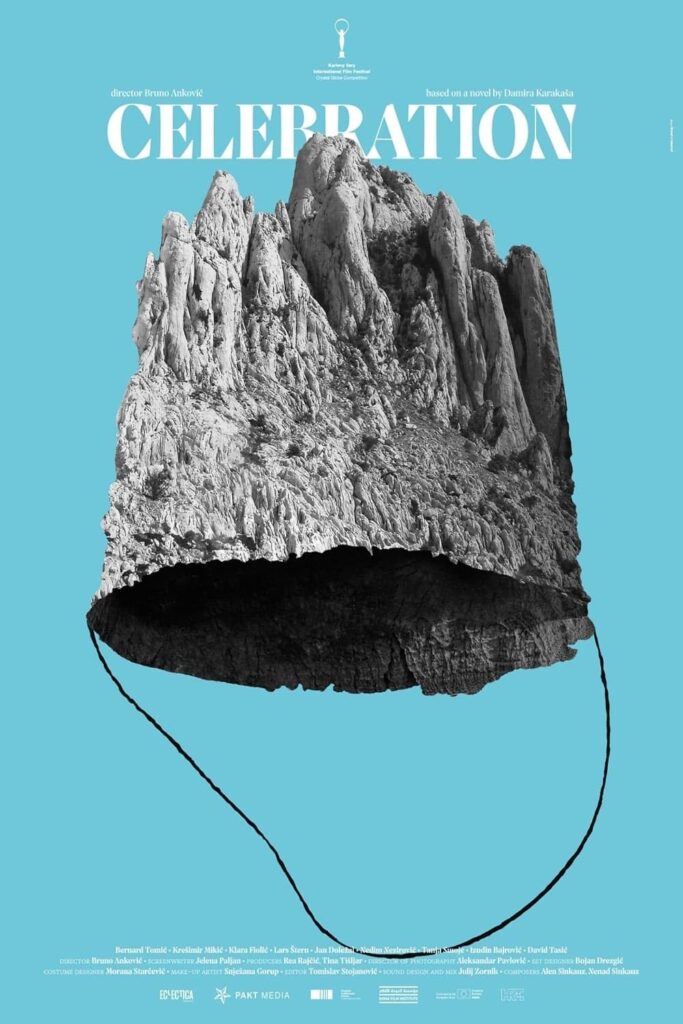
BestBook: Your prose has undergone a series of film and theatre adaptations: the films ‘Proslava’ (‘Celebration’) and ‘Kino Lika’ come to mind, and the plays ‘Sjećanje šume’ (‘Memory of the Forest’), ‘Blue Moon’. Do adaptations make you happy?
In the conversations between the two greats, Borges and Sábato, what is a book, what is a film based on a book, they agree that the book is when you read it, and the film is when you tell someone about that book. “Proslava” really delighted me, Bruno is an excellent director. The film won the Grand Golden Arena at Pula, the Oktavijan Award from film critics, but only six thousand people watched it.
BestBook: At the beginning of the Croatian War of Independence, you returned to Lika to defend your village and your home. With what motives and ideals did you join the armed forces then? Did you have any choice at all?
War is horrible; in it only death wins, and as the grandfather in “Sunčanik” says, all soldiers are the same, only the insignia on their caps is different. And my village was on the front line, surrounded on three sides, so one week I was in Kulušić, I remember it was a Thursday and we listened to the Pixies, and just a few days later I was in a trench, defending the house and my parents. I saw for the first time a badly wounded young man, a neighbor; a burst had crossed his chest, he was gasping and then died. However, I come from a military region; all of mine were soldiers, and Brinje was once an officers’ center. I was supposed to be either a priest or an officer, and given what the former state was, it meant an officer in the JNA. If I had been a JNA officer and lived in Belgrade, if I had had a wife and five children there, what would have become of me? Would the same have happened to me as to the character from Adisa Bašić’s excellent book “Knjiga o Almiru” (“The Book of Almir”), one of our best anti-war novels?
BestBook: By a twist of circumstances, you wore an HOS uniform with the slogan ‘Za dom spremni’. ZDS is today once again a main topic in public discussion. Did you listen to Thompson during the war?
At the beginning we had hunting rifles, one of those Schmeissers with a drum magazine from the Red Army, a few pistols that would drift a meter to the left or right; then a cousin of mine came from Germany to help, and in Zagreb, at HOS headquarters, he took on a uniform and a light machine gun. He disappeared somewhere and left everything behind; I took his machine gun, beret, and camouflage shirt on which it said “Za dom spremni”, but back then we didn’t think about it; what mattered was getting to weapons; some people sold a cow for a rifle. In the previous war, the only partisan from my village, about whom I may soon start writing a novel, went to an Ustaša command in Zagreb, drew a uniform and a rifle, returned, and went into the forest among the partisans. And I first heard the Thompson song on the radio; it was listened to on the other side too. Still, that’s not my music. In music I was picky; I really loved Šarlo Akrobata, and of course our Lika band Sexa: the best band in the former state. Thompson is an industry and of course a media vehicle; various political messages are transmitted through him, and “Za dom spremni” is an Ustaša salute. The education system failed, so everything around us is full of ignoramuses; and ignoramuses, more than anything, know how to hate.
BestBook: How do you explain Prime Minister Andrej Plenković’s shift to the right? Could that shift have long-term consequences for Croatia’s future?
Power is apparently so intoxicating that a person is ready to sell even his soul to the devil for it; and since politics is the skill of staying in power, he plays his game because he is a very intelligent man, hungry for power. What he is doing now, and precisely because I don’t believe he is sincere in his rightward turn, makes it all especially repugnant. These are levels of opportunism that must not be acceptable. For Croatia’s future it certainly is not good, but Croats anyway prefer to live in the past. Only, the past is unknown to them, and the future is known.
BestBook: In your municipality of Brinje, the first census in the mid-19th century recorded 15,000 people. Twenty-five years ago, 4,100 residents were recorded, and today there are 2,500. Is depopulation Croatia’s biggest problem?
When I was a boy, my village had about eighty inhabitants; now it has only four: Toša, a retired policeman, one hippie who returned from Belgrade, and my parents. The bus that came for us pupils from Brinje, when it passed through the villages, was full; so I would go to sleep in my mother’s village, a few kilometers farther on, to catch a seat, because I got tired of standing – I wanted to sit in a soft seat too. Now there are no pupils at all in those villages. In Brinje there used to be around 500 pupils; now there are about 150. Those numbers speak for themselves. But I don’t think depopulation is even close to Croatia’s biggest problem. Croatia’s biggest problem is that, as a character in my story says, you can’t make a violin out of a trough.
BestBook: When I was looking for your books on the shelf, I noticed they form a series of thin volumes that together barely reach the length of a single title by Knausgård or Nádas. Why have you never opted for the form of a long saga-novel? Kundera, in the essay ‘The Art of the Novel’, writes that the novel must have breadth in order to encompass all the complexity of human existence. Will we ever get from Damir Karakaš the “great Croatian/Lika novel”?
Certainly the novel must have breadth, but that breadth does not manifest in the number of pages; although I’m aware that people in my village would respect me more as a writer if I had a three-thousand-page novel and brought it into the yard in a wheelbarrow. At the beginning, my novels have very many pages – “Sunčanik” had 350 pages – but since I hold to what Chekhov said, that words should be narrow and thoughts wide, it was shortened to 120 pages. Tolstoy, of whom they say is the only normal genius in the world, is one of my favorite authors; I love his thick novels. But I have always been fascinated by those novels which, on so few pages, bring so much. Great novels and masterpieces of domestic and world literature come to mind: “Dnevnik o Čarnojeviću” (“Diary of Čarnojević”), “Usta puna zemlje” (“A Mouth Full of Earth”), “Pedro Páramo”, “Velika bilježnica” (“The Notebook”), “Užas praznine” (“A Sorrow Beyond Dreams”), the novels of Annie Ernaux, and I could add one of Kundera’s novels too. But however it may be, literature is very important to me. As Flaubert says, the only way to endure this life is to enter literature as a permanent orgy. It is also a territory of freedom, and we must fight for freedom and not allow life to arrest us in any way.