Heart of darkness, heart of evil!
The story of Joseph Conrad’s life and travels and the colonial experience that inspired his journey through the Congo and the writing of 'Heart of darkness'
When the Romans first caught their breath beside some ancient Thames, before that light rising from the river since the age of knights – and surely, therefore, since time immemorial – it was certainly not napalm that clogged their nostrils in the early morning. They could not possibly have imagined that they had just landed on the soil that would give birth to the worst of the worst among oppressors, to colonizers such as neither Rome nor the devil himself could have devised. What the Brit ish Crown did to the world is enough to make any hell surrender before it, disarmed, disgraced, and deserving of every insult. The British were far from alone in this; many nations strolled down that paved road, nations that by God knows what merit came to wield the ridicu lous spasms of modern democratic practice. And already at the end of the nineteenth century Joseph Conrad had pinned that refined West onto neatly arranged stakes somewhere in the jungles of the Congo – or perhaps Ghana; as if it made any difference. Congo, Africa, Viet nam; Syria, Palestine, whatever you like. We are, after all, civilized peoples; savages par excellence.
Nineteen hundred and some years after the Romans, many heirs to that office set out in the opposite direction in service of the never-abandoned colonial project – of course they had been sailing for centuries already, but nineteen centuries had to pass, counted according to the law of God and the West, for the entire nature of that mechanism on which our civilization rests to be com pressed into this one narrative, into one journey upriver that feels, in every way, as if it were the only journey there has ever been. That the greatest name in English travel writing should be a man who until his early twenties scarcely spoke English at all suggests that there is, perhaps, some justice in this world worthy even of a deity. The stories “Youth”, “Heart of Darkness”, and “At the End of the Tether” were published last year by Vorto palabra in a translation by Martina Pranić, based on the collection first issued in 1902 under the title “Youth: A Narrative and Two Other Stories”.
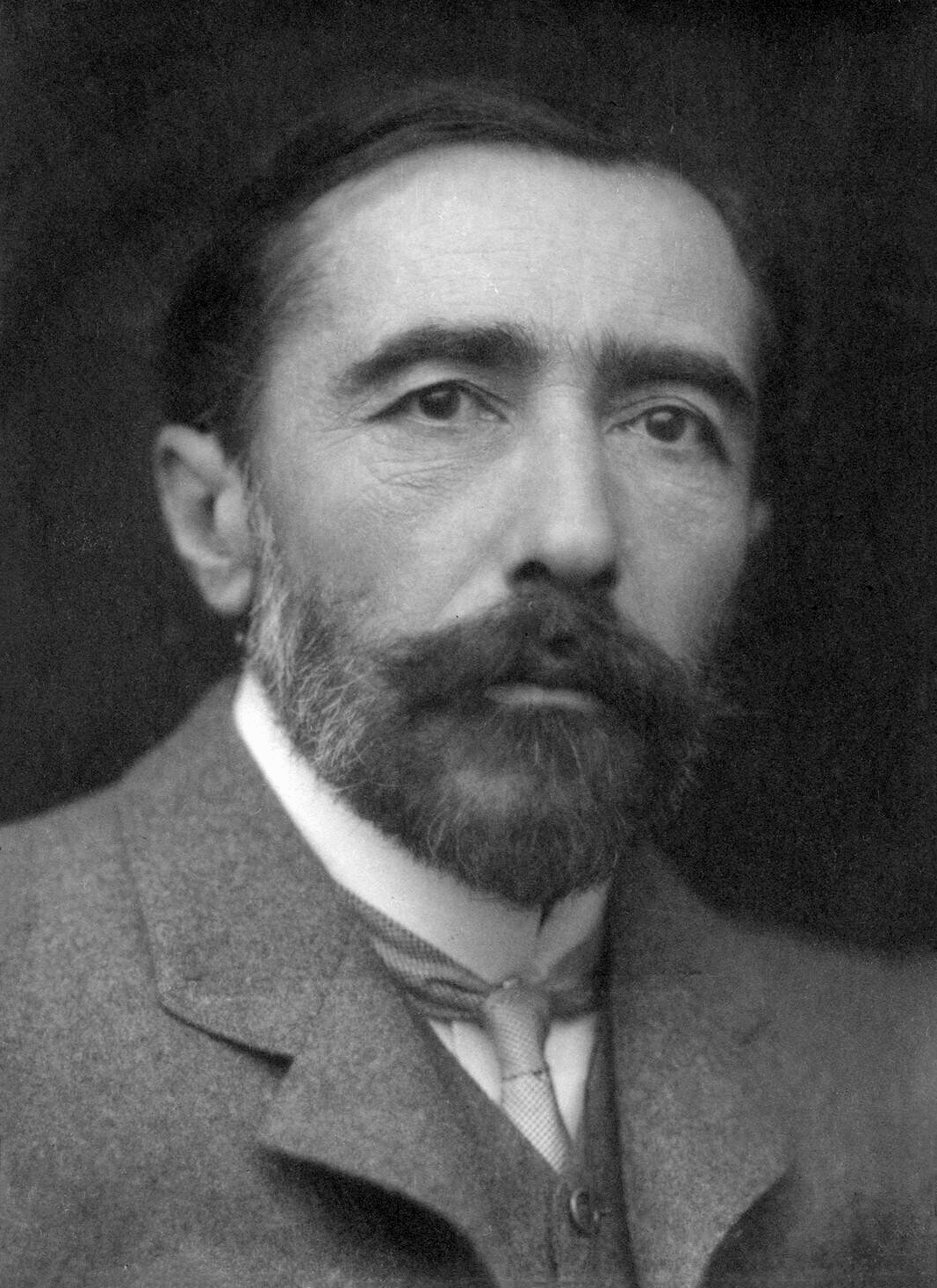
There is something irresistible about framed narratives, about that link between written literature and oral storytelling, that almost supernatural form of literature itself. Joseph Conrad is often described as a master of the framed tale, and this skill is certainly no accident in a writer whose biography is defined as much by sailing as by writing. Polish by origin, born in what was then Tsarist Russia, raised among Ukrainian Jews, the rural landowning Polish aristocracy, then in the urban center of Warsaw in the middle of the nineteenth century, and later among Poles under Austrian rule unburdened by Russian imperialism, Joseph Conrad was sent at the age of just sixteen to Marseille to train for a position in the French merchant marine. After four years at sea under the French flag, Conrad joined the British merchant navy, bringing with him far more knowledge of seaman ship than of the language in which he would become a classic. The oldest surviving letters Conrad wrote in English, composed in his late twenties, reveal thoughts formed in his native Polish beneath words that were accurate and mostly correct. In the 1890s he obtained a post with the Société Anonyme Belge pour le Commerce du Haut-Congo, the Belgian company that sent him into the heart of the dark continent on the great exploitative expedition of his life, from which he returned a some what altered Conrad – and with him, Charles Marlow.

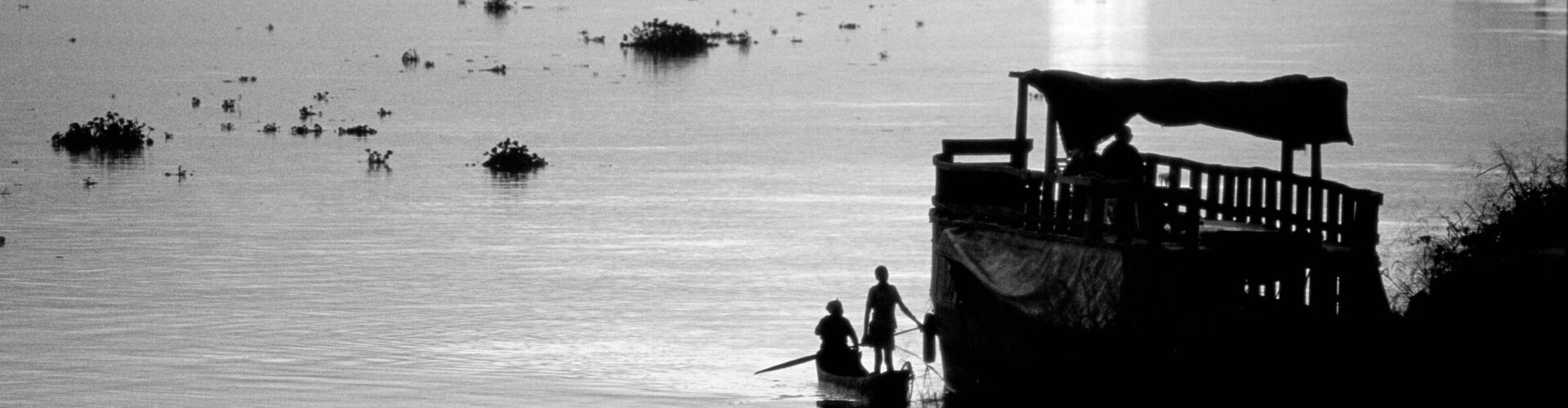
That last of the literary Odysseuses, Conrad’s well known alter ego, whose life from the titular “Youth” to old age is described precisely across these three novellas, is one of the most skillful narrators ever to enter writ ten literature. He is known above all for his long and agonizing progress up the Congo River into that “heart of darkness” which, clearly enough, lies all the while in Europe itself – there at the mouth of the Thames, which at the beginning of the novella, in the eyes of the man to whom the story will be told, stretches out “like the beginning of an interminable waterway.” What those tender European eyes encounter during these “lofty and just proceedings” – what Conrad left in his ship’s journals for his literary homeland, to its honor and shame alike – is the spectacle of the savagery visited upon a conquered people. That native rabble announces itself by the sound of drums, not always distinguishable from the forest itself, a sound first described as a tremor, while there “sank and spread a mighty ripple of sound, a sound strange, appealing, suggestive, and wild” – and then, Marlow continues in this act of profanation, “perhaps as profound a meaning as the sound of bells in a Christian country.” One must imagine a tremor that is immense and yet barely audible – a terrible image, somewhat like church bells and yet, in every way, unlike them. Even when church bells come from far away, softened by human hands and the built environment so that they cannot startle or interrupt when they begin at the proper hour, they are always somewhere resounding, always already ringing. But what the drums ominously herald for Marlow is the dying-off of exhausted, broken black laborers on a nearby railway, a scene of disease so widespread that no one recovers from it; a railway meant to carry ivory. The two-month journey leads Marlow toward the station of a certain Kurtz, chief of the ivory operation, a chance magnate of his age and the notorious lord of that black heart of darkness, infamous and revered – and revered, of course, by those same poor and conquered people, whose heads adorn the stakes surrounding Kurtz’s station. The desperate need to submit to gods, the fraternity of humankind in every world.

Kurtz was most famously embod ied by Marlon Brando in Coppola’s astonishingly precise adaptation, “Apocalypse Now” from 1979, where the dreadful figure who embodies the whole of Western Europe becomes an inhuman and tormented American monster. The ease with which one Congo from the end of the nineteenth century can be replaced by Vietnam or Cambodia during the Cold War says more than anything else about the timeless and horrifying truth of the actual savagery of our human race, about our immense seduction by the idea of exploitation in every form, and at bottom by the perverse pleasure of carrying out extermination. All of it can fit into a single sweaty, blood ied face, filling almost the entire frame, when the light falling across it, both bright and weak, flickering and reddish, can only be ominous – a face that, at the end of its strength, uses the little breath it has left to utter those famous Conradian words: “The horror… the horror!” Everything is there, and that is why these stories cannot be read as historical fiction, why they feel disturbingly contemporary.
What belongs to history, and what I cannot stop thinking about after rereading Joseph Conrad, is the literature created by travelers and seafarers – even if they were colonial conquerors, they were still explorers too, and something civilizational and cultural did reach us from them. But I cannot stop thinking about the way litera ture once sprang from ship’s logs, that true literature of adventure, those endless Odysseys; literature made by the very men who hauled ropes, furled sails, and nearly died out on the open sea – and what, after all, is more lit erary than adventure itself? Today one need know almost nothing about the means of transport that can take us to the other side of the world in an instant, and there is no journey where man and travel, man and nature, are bound together as they are in seafaring. It is so easy to romanticize it, so easy to forget the evil nature of those old, celebrated expeditions – and yet what undeniable pleasure there is in reading about them. No one writes about budget airlines and overcrowded airport waiting lounges, glass smoking booths, du ty-free alcohol and perfume. Even lazy train travelers are somehow closer to Conrad and Melville, and there are fewer and fewer of them in books too; fewer cars as well, and those once-beloved road novels. Such travel writing, travel writing that does not need a destination, belongs now only to the hardy walkers. It is hard to imagine that ship’s logs from oil tankers, or the notes of someone adept at managing drone fields, will be what remains to us. For that, thanks be to colonialism. But reading re mains, irresistible as the feeling that the idea of Bangkok gives the young Marlow in “Youth” – a city one never quite reaches, a city that merely sounds and enchants, the idea of the journey itself, of some imagined East. Let literature be like that elusive Bangkok.