Truth is a book none of us has yet read
The autobiography of the great contemporary theologian Tomáš Halík is, above all, beautifully written - slightly ironic...
There are defects and limits we have tried all our lives to free ourselves from, yet which, ashamed of ourselves, we keep reaching for again and again, and which we must carry as a cross.
Was This Really My Life?, Tomáš Halík, Fraktura
To answer the question the author poses to himself in the title: yes, it was, and still is, a wondrous, full, unusual, astonishing life. The kind of life lived by those who pass through difficult, yet unmistakably modern times. Much was missed, lost, and scattered into the dust of time, but everything that was experienced, seen, and under stood could never have been possible had a different, easier path been chosen. Tomáš Halík, as a rule, chose the harder paths, though he did not have to, both in the years when he stood on the “defeated” and persecuted side, and also in the years when he became one of the “victors” and refused, even for a moment, to become a persecutor himself.
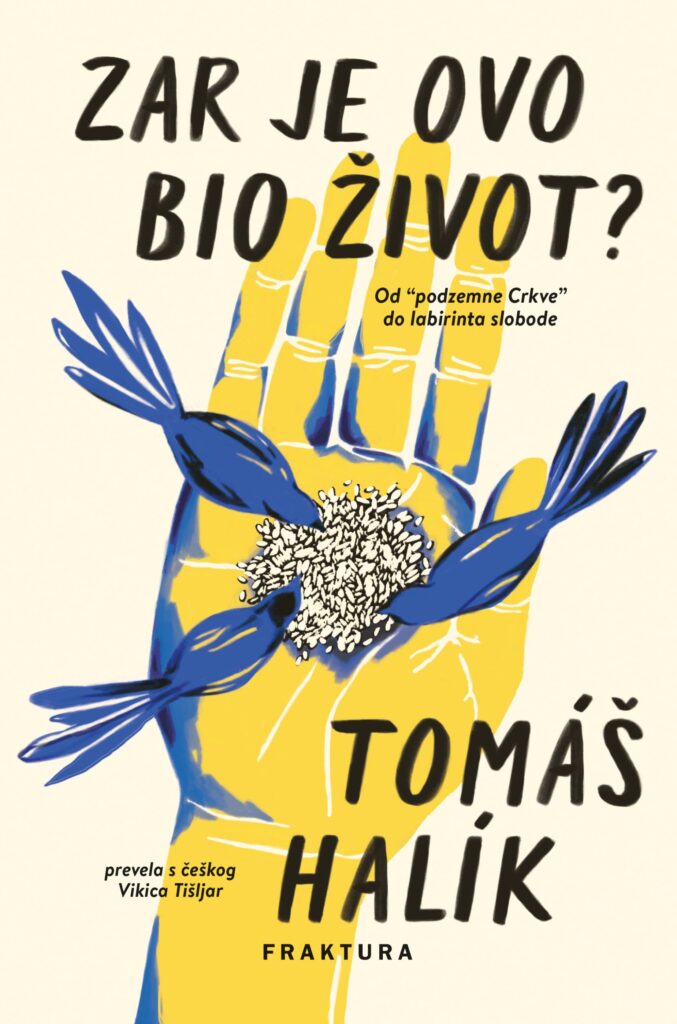
The autobiography of the great contemporary theologian and Christian philosopher Tomáš Halík is, above all, beautifully written – slightly ironic, to the extent Christian faith allows, and in line with Czech mentality, history, and sense of humor. It is sincere, without the slightest conviction of his own greatness or importance, as he himself says.
After an almost twenty-year period when I was not allowed to travel anywhere except to a few countries of the communist empire, during the following twenty years I visited every continent on our planet, including Antarc tica. After being completely excluded from the academic world for twenty years, I was given the chance to teach at universities on five continents, including the most famous university in the world, Oxford. I began receiving prestigious awards and honorary doctorates. Fortunately, all this happened at an age when one no longer takes such things too seriously.
Was This Really My Life?, Tomáš Halík, Fraktura
Tomáš Halík had an unusual and rich life, which he writes about honestly, as far as he can, but also some what ironically, taking care that the witty barbs are directed first at himself, and only then at others. Even his discovery of faith – he grew up in a liberal Czech family of intellectuals who did not deny religion, but neither cared much for it beyond the traditional celebration of holidays – was an independent, personal act, one he describes with great honesty. To be sure, the winds of freedom blowing through Czechoslovakia in the late sixties, with the Prague Spring, helped him on that path, but so did their brutal suppression. It is worth noting, something perhaps less familiar to readers from this region, that Czechoslovakia, alongside the Soviet Union, was perhaps the harshest country in the Eastern Bloc in suppressing organized religion. The Catholic Church especially, while Protestants had just a fraction more freedom, was subjected to far greater repression and control than in Poland or Hungary. His discovery of faith in those years, along with his discovery of an entire world of freedom in thought and expression, a freedom that briefly flour ished in Czechoslovakia, somehow led him toward a priestly vocation. And so he became a secret priest. I do not want to reveal too much and spoil the pleasure of reading, but because the official Catholic Church in the Czech lands was under strict state control, especially in education, secret priests, and the underground Church more broadly, were an attempt to evade the close watch of the secret police and to allow those ready for such a calling to avoid the traps of blackmail, sur veillance, or physical obstruction from entering the ranks of the Church.
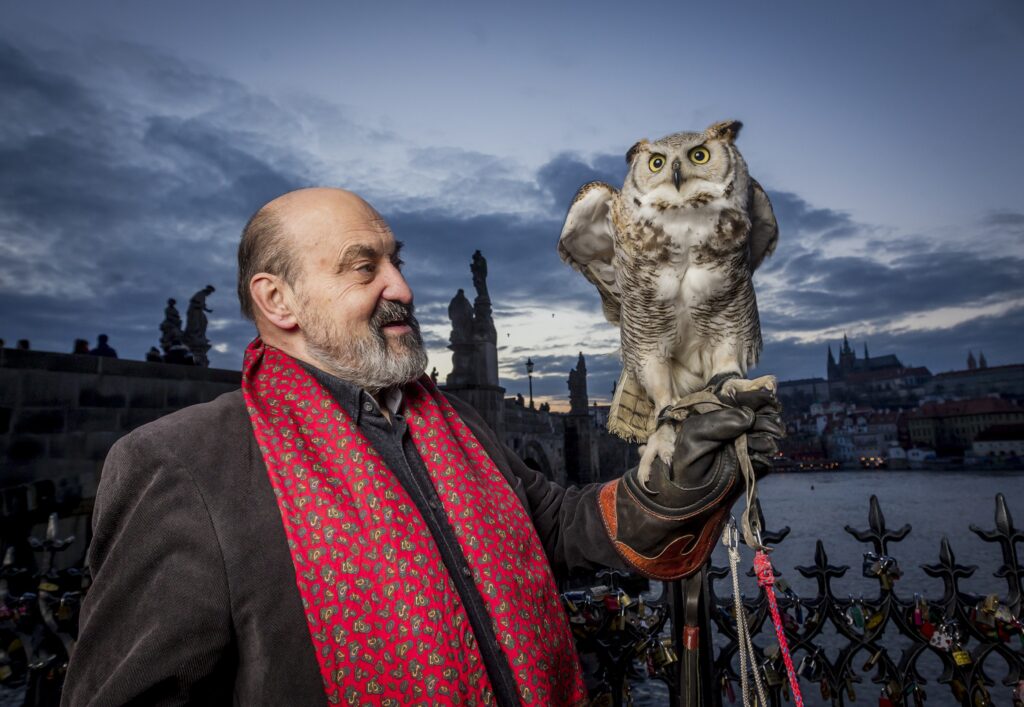
Halík himself was or dained secretly, in East Germany. Secret priests, along side their vocation, regularly held secular jobs, and they revealed that they were priests only rarely, to chosen people and only when necessary. It sounds somewhat mystical and rather adventurous. But Halík describes all of it as simply the life that, in those circumstances, could hardly have been much different, never diminish ing his own courage and sacrifice, yet never once trying to wrap them in an aura of sanctity or heroism. All those difficult years that Halík describes give us a completely new and different side, a picture of a completely different world of dissidents and opposi tion figures behind the Iron Curtain. It is a living world, growing far from sight and deep beneath the surface. But Halík also offers insight into the lives of dissidents we do know. He was a close friend of Václav Havel, who, like Halík’s mother, did not know that Tomáš was a priest, and of a whole range of figures in that liberal secular dissident and opposition movement. And in all this he is completely honest and does not censor himself. The only thing one might reproach this autobiography for is that Halík gives too little space and explanation to some intimate details. But that is really the complaint of a curious reader who simply wants more. It is almost clear from the first line that Tomáš Halík, no matter how much he writes about himself, will not place himself at the center. That sounds absurd in the case of an autobiography, but it truly is so. Instead, he watches himself at once as observer and as subject of the times he describes.
I realized that egocentrism, arrogance, and self-love pre pare for a person the deadly trap of depressive bitterness, with which they trap not only themselves, but spread it into their surroundings as well, no matter how much they try to camouflage it and pretend otherwise.
Was This Really My Life?, Tomáš Halík, Fraktura
Surprisingly, and positively so, the part of Halík’s au tobiography set after the fall of the Iron Curtain, after the Velvet Revolution, is even more interesting than the years when he was a secret priest under the watch of the secret police. And here too Halík’s insights are an inexhaustible treasure of human character, weakness, greatness, and fragility, almost un matched in contemporary biography. What was once persecuted sudden ly becomes victorious, and people who seemed like saints suddenly, once draped in the flags of victory, become something entirely different.
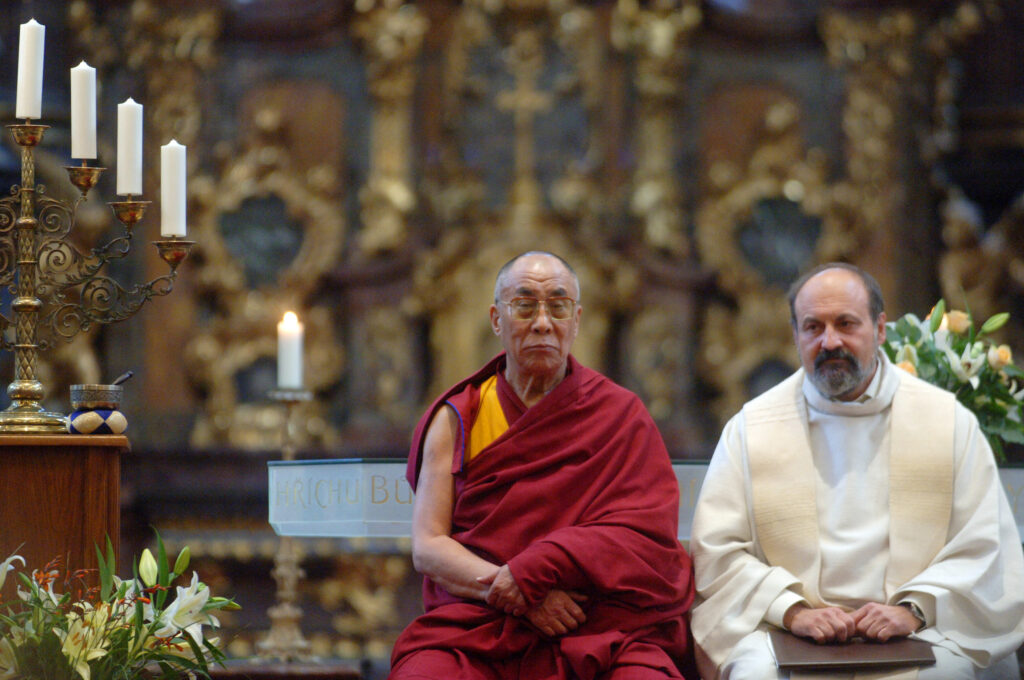
He himself, meanwhile, becomes almost more persecuted than he had been during communism. Of course, persecuted in a different way, often by people who until recently had shared his fate. Although not only by them, as usually happens, yesterday’s inform ers regularly attach themselves to the “winning” side. Their skills and talents are always needed. Halík describes all these changes, and even the partial disappointment with freedom so eagerly awaited, above all the transition that impover ished half the country and stupefied the other half, with surgical precision, without bitterness, but also without concealing bitter truths.
And I too am convinced – and I have said and written this many times – that to identify oneself with truth and to present oneself as its owner is the same sin as ceasing to care about truth and passing over into the camp of cynics. Whoever begins to regard truth as his property rather than as his obligation has already lost every strug gle with cynical political power, not only physically and politically, but morally as well.
Was This Really My Life?, Tomáš Halík, Fraktura
An exceptional book by an exceptional man, one that is read almost in a single breath.
Truth is a book none of us has yet read.
Was This Really My Life?, Tomáš Halík, Fraktura