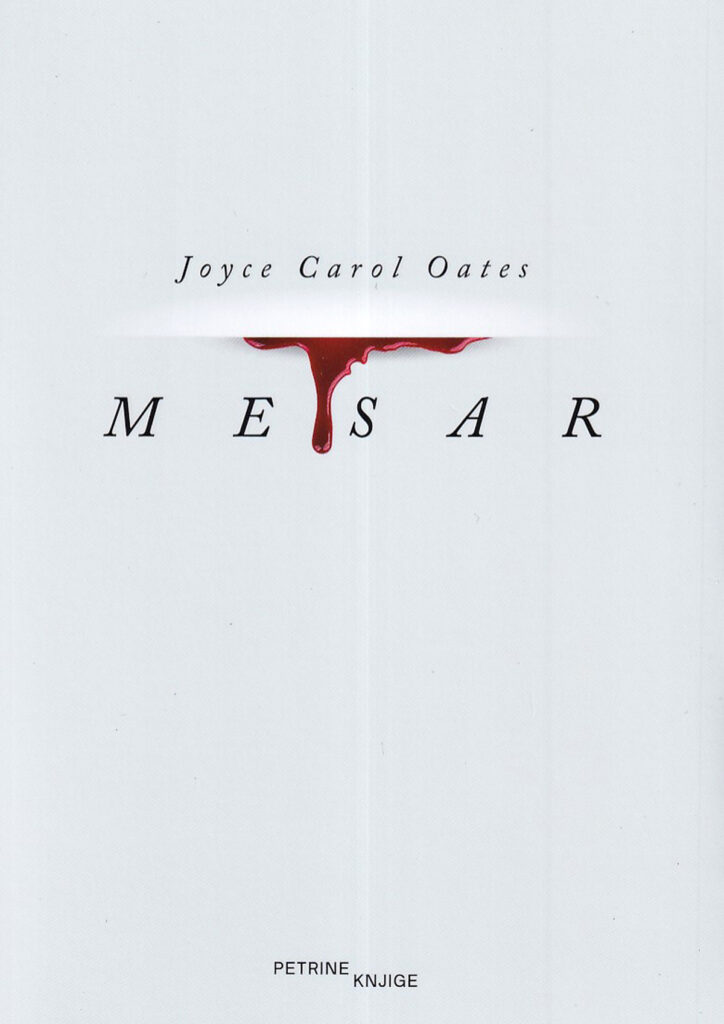
Where science ends and torture begins
In 'Butcher', Joyce Carol Oates explores the dark history of medicine through the life of one of the 19th century’s most controversial doctors
The first book I read this year was “Butcher,” because why should a new year begin with optimism when it can begin with brutal realism? This is a dark historical fiction based on real nineteenth-century documents, in which we follow the career of the, to put it mildly, controversial Dr. Silas Weir. The truth is not beautiful, and we are given a work that brings out unimaginable violence, power, and the deeply rooted delusions of science without restraint. The prologue itself makes it very clear that this is not a pleasant read and that it requires a strong stomach. Dr. Silas Weir is an ambitious physician who becomes the head of a women’s asylum. The nineteenth century is a period in which the boundaries between science, pseudoscience, and violence are unclear. Weir builds a reputation as an innovator and reformer, and what began as a desire for scientific advancement turns into cruel demonstrations of power and the dehumanization of female patients. This is a past in which women – mostly the poor, the deaf and mute, or the socially undesirable – were confined and, against their will, subjected to numerous inhumane, invasive procedures. Besides amputation, various surgical interventions were connected to the reproductive organs, such as sterilization, considering that women’s mental disorders were associated with the womb
The novel is structured through Weir’s medical records, testimonies, and the perspective of his son, who tries to understand and justify his actions. Joyce Carol Oates writes very briskly and analytically. I was astonished at how she managed to present such an unpleasant, heavy, dark subject in a sophisticated style. This is a novel relevant on several levels – it compels us to think about ethical responsibility, scientific power, and courageously raises the question: where does science end and torture begin? As we approach the end, it becomes
clear that the antagonist is not only Weir, but the entire ideology that allowed cruelty to become synonymous with science.