The savage reality behind tradition
In her novel 'A Woman Is No Man', Etaf Rum exposes arranged marriages, violence, and the lives of women trapped by tradition
Summer 2006, somewhere in western Herzegovina. With my fellow students, I go to a family dinner. We are led there by Friar A., the priest responsible for our internship, determined to put the monastery library in order according to the rules of the profession. We are received at dinner as VIP guests, with a degree of respect that we, as penniless students, had never before experienced. Delighted by the setting, but also blinded by the conservative indoctrination that had not passed us by, we do not immediately notice that the women are not at the table, but around it, as servants. I turn to our friar and ask why they do not sit down at the table, to which Friar A. replies that such is the custom. Friar A. is empathetic, notices my discomfort, and hastily asks the woman who is obviously the “mater familias” to join us. The lady in question, visibly uneasy, thanks him and replies that they (by which she presumably means herself and her daughters) will dine later in the kitchen. The episode ends with Friar A. telling me that I smoke too much and ought to stop. Twenty-one years later, the friar’s advice has been taken, and my impression of “the people down there” has not changed in the slightest – wonderful, hospitable people who are, one and all, victims of an internalized patriarchy cultivated over centuries. Postwar, post-Yugoslav reality, meanwhile, does nothing to affirm progressive politics: it is hard to say whether, and to what extent, that region has changed in the last twenty years. Except that there are fewer and fewer people there, as in Croatia, after all.

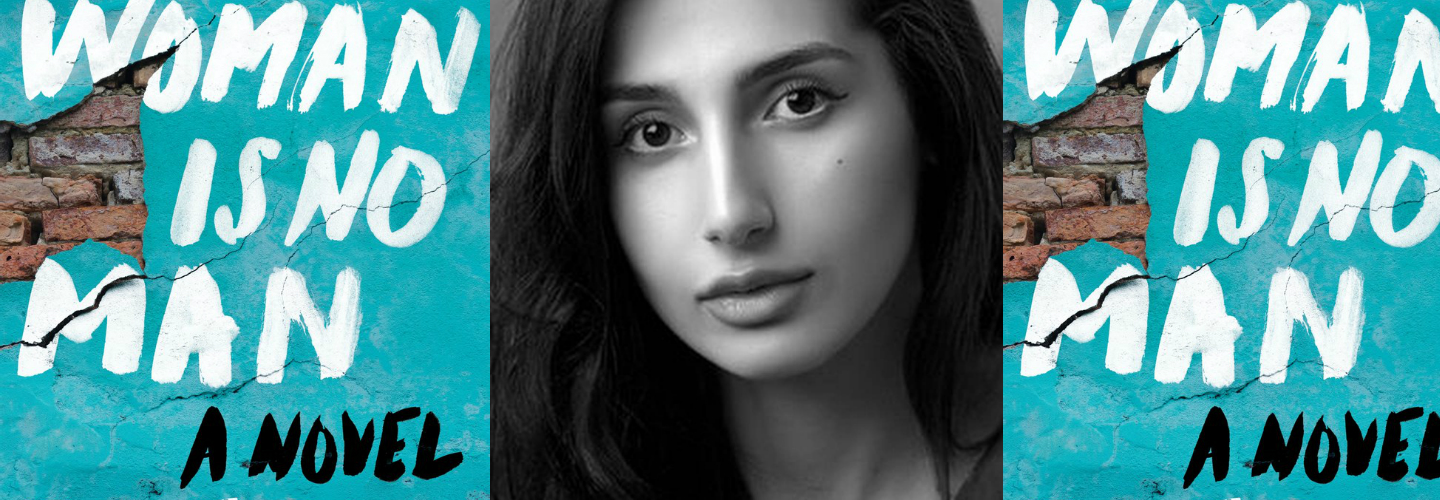
Etaf Rum (New York, 1988) is a Palestinian-American writer whose debut novel A Woman Is No Man, originally published in 2019, in my case reactivated the memory of that dinner in western Herzegovina; a memory that reminds me that the cultural differences between civilizations are, when internalized patriarchy is concerned, far smaller than one might at first think. Hence another association – namely with the memoir prose of Deborah Feldman, a writer who, like Etaf Rum, grew up in Brooklyn, then confronted the tragedy of an arranged marriage and ultimately fled to Berlin. Of course, the book in question is “Unorthodox: The Scandalous Rejection of My Hasidic Roots” (2012), from which the German director Maria Schrader, eight years later, made an excellent miniseries for Netflix. The similarities between the families described by Deborah Feldman and Etaf Rum are astonishing, although the identities involved are opposed (the Hasidim, admittedly, do not themselves recognize the State of Israel), identities which, if practice is anything to go by, are founded on the destruction of the other (with the added point that the agony of the Palestinian people at this very moment is difficult to compare with any other collective suffering). The similarity is, of course, grounded in the tradition of fundamentalist patriarchy, which reduces woman,
regardless of the formal legal context, to an object.
In both cases, although the setting is “the capital of the world,” a woman’s predestination is service to a man to whom she must also bear offspring – preferably male. What is at issue is Naseeb – a fate that a woman is obliged to accept, in no way questioning the possibility of influencing her own future. It is this indoctrinating postulate that Isra, a seventeen-year-old girl (as Feldman was in her memoir), confronts when in an arranged marriage she is wed to Adam and brought from Palestine to the United States of America, where she soon faces the loss of illusions and the independence of family conservatism from the liberal social context.

Isra’s situation worsens each time she gives birth – since it is her “naseeb” that each child is female – and Adam’s alcoholism and abusive behavior, as a consequence of the indoctrination in which his mother Fareeda takes the lead (herself an indoctrinated victim of gender-based violence), encourage a kind of Stockholm syndrome. The beatings Isra receives every day she accepts as deserved punishment, while all her remaining resistance is contained in her love of reading, which, encouraged by the rebelliousness of her sister-in-law Sarah, she will secretly pass on to her children. Since the plot of the novel is circular, allowing us to follow in parallel three generations of women bound together by fate, we gradually learn Fareeda’s tragic background as well (which opens the decades-old question of the geopolitical causes of collective Palestinian suffering), which helps ensure that we are not ultimately surprised by her critical awakening. That turn, which seems to me Hollywood-like, is the point at which Etaf Rum and Deborah Feldman diverge, since Rum’s perspective inaugurates America as a land of constant change, which is not the case with her older colleague. Feldman, if one is to believe the book and the series, realizes that the family is permanently immune to change, and accordingly chooses flight to, ironically or not, Germany, to Berlin, thereby becoming a witness to a globally scarcely comparable civilizational metamorphosis, brilliantly illustrated in the series by the protagonist’s bathing in Lake Wannsee, where the “Final Solution to the Jewish Question” was agreed upon. Isra’s escape is different, and as such entails her personal suffering, and can be viewed as an intergenerational deposit in favor of future changes. Those, of course, in favor of emancipation, will be taken up before anyone else by Isra’s eldest daughter Deya: an outcast in the black-and-white cosmos of tradition, a pioneer of playfulness and curiosity that neither prospective bridegrooms nor boys of the new era can suppress, even though entering into an arranged marriage still poses no problem for them. Thus, over the span from 1970 to 2009, albeit at great cost and despite the idea of staying, a change is achieved which, as I said, is ripe for a movie adaptation.
eading books signed by Etaf Rum or Deborah Feldman, as also when we read books by Margaret Atwood or Dubravka Ugrešić, especially if we are men, we have an opportunity to learn where we go wrong
A while ago, a feminist journalist started a discussion on social media about why men should read titles such as, let me paraphrase, the two books discussed here. The spatiotemporal continuity of patriarchy, which we have illustrated both by comparing the books of Etaf Rum and Deborah Feldman and by a private association with one long-ago student summer, confirms itself as what anthropology has long called a cultural universal. For that purpose, one must be tolerant of minor narrative weaknesses, even of the naivety of engagement-generated optimism refuted by the devastating reality of today’s Trumpian America. Reading books signed by Etaf Rum or Deborah Feldman, as also when we read books by Margaret Atwood or Dubravka Ugrešić, especially if we are men, we have an opportunity to learn where we go wrong. Or, far more likely, to become aware of our mistakes, which is a logical precondition for civilizational shifts which, in a Croatia exposed to the virus of fascism, are faced with permanent threats. Visitors to gynecological clinics, just like the visitors to city squares every first Saturday of the month, know very well what is at stake. The border is thin and porous between a country of Saturday kneeling and a country whose newly minted husbands gather evidence that they have deprived their newly-wedded wives of their virginity, as Adam did, only then to leave the further forensic processing to his mother.